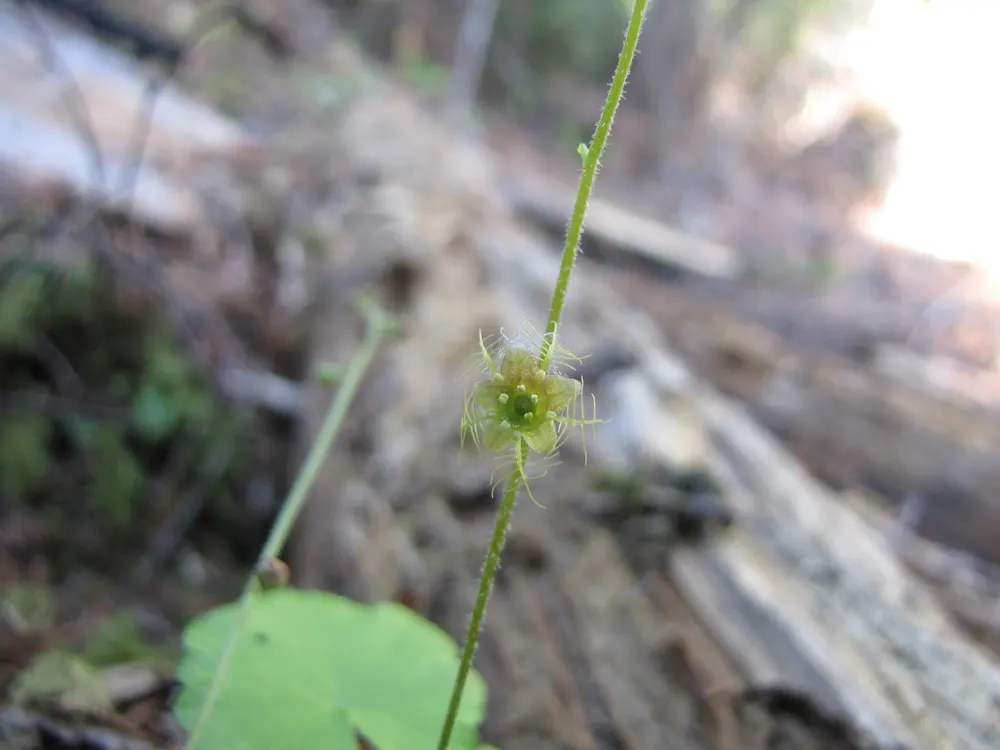
Photo: Botsci, CC BY-SA 3.0 (via Wikimedia Commons)
Naked Miterwort
Mitella nuda
Also known as Bare-stemmed Miterwort, Fairy Cups, Common Mitrewort
Key benefits
✦Traditional uses
✦Naked miterwort is a quiet little plant of the northern forest floor, more often noticed by botanists and wildflower wanderers than by herbalists. Unlike many of its Saxifragaceae cousins, it does not carry a well-documented history of medicinal or culinary use among the peoples who lived alongside it, and no reliable ethnobotanical record credits it with any specific remedy. Its true legacy is aesthetic and ecological: for centuries it has simply been one of the small, faithful signs that a forest floor is cool, undisturbed, and rich with moss. Where it has earned a place in memory, it is in the delight of finding its tiny, fringed flowers scattered like frost across a shaded log or streambank.
How to grow & use it
✦The full apothecary for Naked Miterwort
Traditional remedies and step-by-step preparations, a complete growing guide, and how to harvest, dry, and store it, all unlocked with HerbLens Unlimited.
- ✦Remedies & preparations
- ✦ Growing guide
- ✦Harvest & storage
From under $6 a month. Free plant identifications always included.
- ✦Wild ginger (Asarum canadense)
- ✦Foamflower (Tiarella cordifolia)
- ✦Partridgeberry (Mitchella repens)
- ✦Two-leaved miterwort (Mitella diphylla)
- ✦Foamflower (Tiarella cordifolia)
“For the quiet reward of finding a tiny, frost-lace flower hiding in the moss where almost no one thinks to look.”
The genus name Mitella comes from the Latin for 'little miter,' describing the plant's tiny seed capsule, which splits open into a shape resembling a bishop's ceremonial cap. The species name nuda, meaning 'naked' or 'bare,' refers to its leafless flowering stem, which rises straight from the mossy ground without the pair of stem leaves found on some related miterworts.
Naked miterwort has no established history of food or medicinal use and should not be eaten.