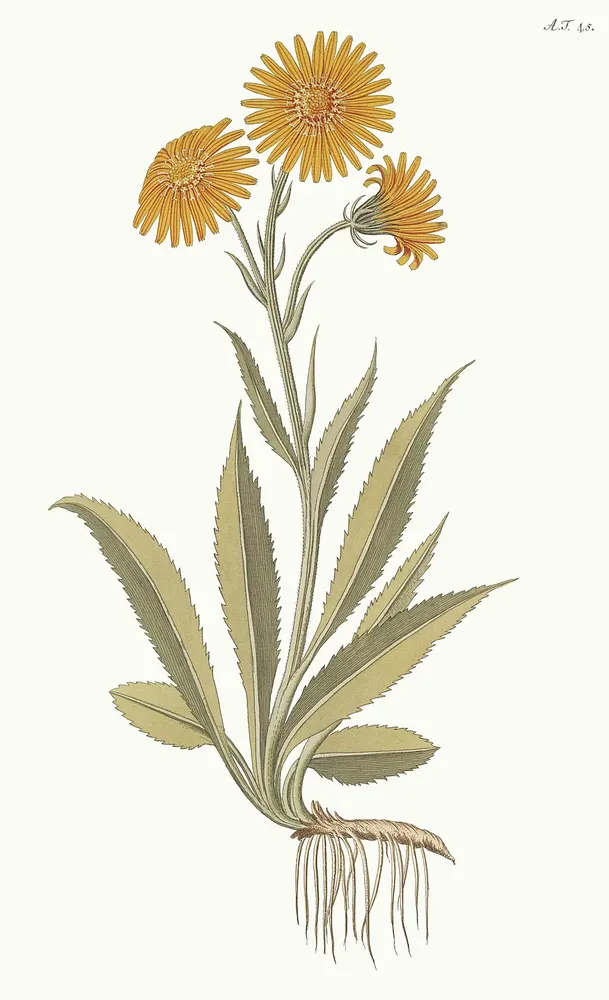
Photo: Nicolás Joseph Jacquin, Public domain (via Wikimedia Commons)
Chamois Ragwort
Senecio doronicum
Also known as Leopardbane Groundsel, Large-flowered Ragwort, Doronicum-flowered Ragwort, Chamois Groundsel
Key benefits
✦Traditional uses
✦Chamois ragwort has long been a familiar sight to shepherds and mountain wanderers, its sunny yellow flowers dotting the high pastures where chamois and other alpine grazers roam, which is how the plant earned its common name. Unlike its lookalike cousins in the Doronicum and Arnica genera, old herbal traditions did not embrace Senecio doronicum as a remedy, and alpine folk knowledge instead treated ragworts of this kind with caution, recognizing that livestock sickened after eating them in quantity. Its enduring value has been visual and ecological rather than medicinal, a hardy splash of gold that alpine botanists and gardeners alike have long admired for its resilience in thin, stony soil. Today it is chiefly grown and appreciated in rock gardens and alpine collections for its toughness and cheerful bloom.
How to grow & use it
✦The full apothecary for Chamois Ragwort
Traditional remedies and step-by-step preparations, a complete growing guide, and how to harvest, dry, and store it, all unlocked with HerbLens Unlimited.
- ✦Remedies & preparations
- ✦ Growing guide
- ✦Harvest & storage
From under $6 a month. Free plant identifications always included.
“For admiring on a high mountain trail, not for the teacup.”
The genus name Senecio comes from the Latin senex, meaning old man, a nod to the fluffy white seed heads that many ragworts and groundsels produce, which resemble a shock of white hair once the golden petals fall away.
Senecio doronicum belongs to the ragwort and groundsel family, a group of plants widely documented to contain pyrrolizidine alkaloids, compounds known to cause serious, cumulative liver damage when ingested, including in livestock that graze on related species. Because of this, Senecio doronicum is not considered safe to eat, brew, or otherwise take internally, and it has no established tradition as a culinary or medicinal herb. Its cheerful, daisy-like yellow flowers can also cause it to be confused with true leopard's bane (Doronicum) or arnica, so careful identification matters if you encounter it on a mountain walk. This entry is offered for identification and garden interest only. If you are ever uncertain about a wild plant's identity or safety, consult a qualified botanist, toxicologist, or herbalist before any use, and keep this species away from children, pets, and grazing animals.