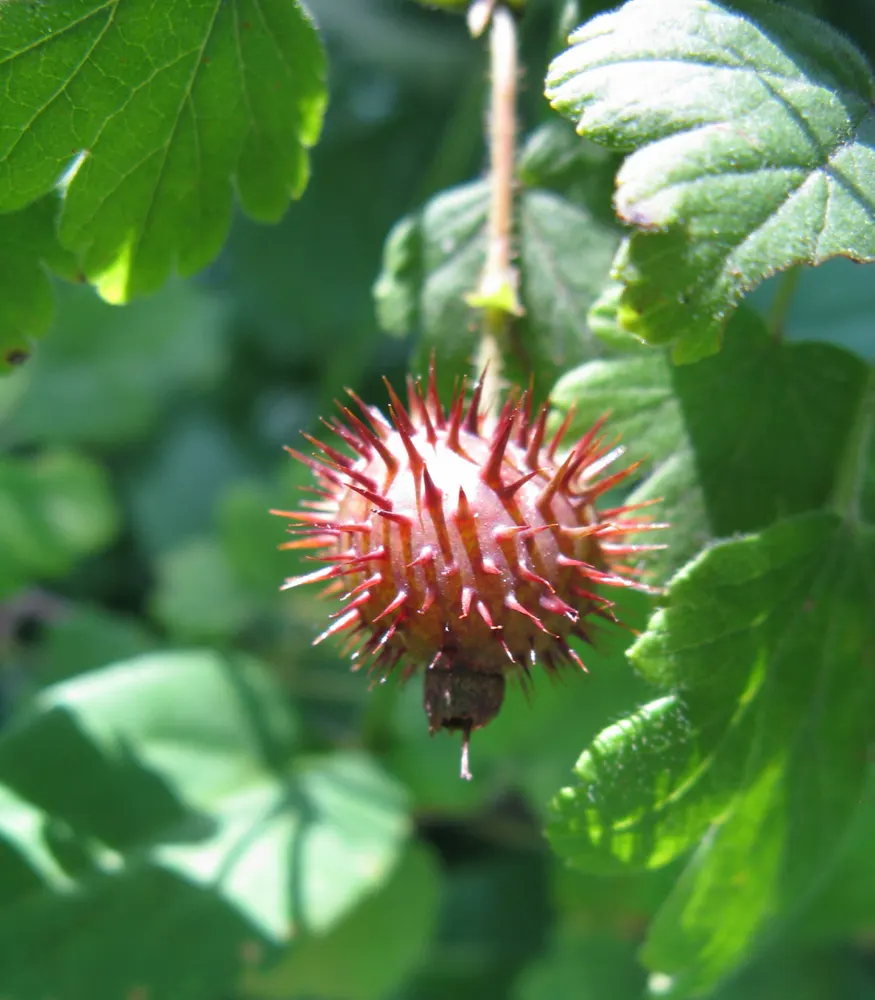
Photo: Nadiatalent, CC BY-SA 3.0 (via Wikimedia Commons)
Eastern Prickly Gooseberry
Ribes cynosbati
Also known as Dogberry, Dog Bramble, Prairie Gooseberry, Pasture Gooseberry
Key benefits
✦Traditional uses
✦Long before cultivated gooseberries arrived from Europe, foragers across the eastern woodlands were already gathering the tart, bristly little fruits of Ribes cynosbati straight off the bramble. Early settlers and Native peoples alike prized wild gooseberries as one of the first fresh fruits of early summer, eaten out of hand once fully ripe or simmered down with a little sweetener into preserves that helped see a household through leaner months. The berries were valued as a bright, vitamin-rich treat at a time when fresh fruit was scarce, and the shrub itself was simply part of the seasonal rhythm of the woods, something you watched and waited for rather than planted.
How to grow & use it
✦The full apothecary for Eastern Prickly Gooseberry
Traditional remedies and step-by-step preparations, a complete growing guide, and how to harvest, dry, and store it, all unlocked with HerbLens Unlimited.
- ✦Remedies & preparations
- ✦ Growing guide
- ✦Harvest & storage
From under $6 a month. Free plant identifications always included.
- ✦Wild raspberry
- ✦Elderflower
- ✦Wild mint
- ✦European gooseberry (Ribes uva-crispa)
- ✦Red currant
“For the forager who still stops at every hedgerow, hoping for one more handful of summer.”
The species name cynosbati comes from the Greek for 'dog bramble,' a nod to its thorny canes, and its round, spiny fruits look uncannily like tiny, bristly burr-covered gooseberries hiding under the leaves.
Ribes cynosbati is not known to be toxic, and its ripe fruit has a long history of being eaten fresh or cooked into preserves. The berries are covered in fine, bristly spines, so wear gloves or brush them off before eating raw, and only very ripe fruit should be consumed, as unripe berries can be unpleasantly astringent. As with any wild-foraged plant, be certain of correct identification before eating, and those who are pregnant, nursing, or managing a health condition should speak with a qualified healthcare provider before adding a new wild food to their diet.