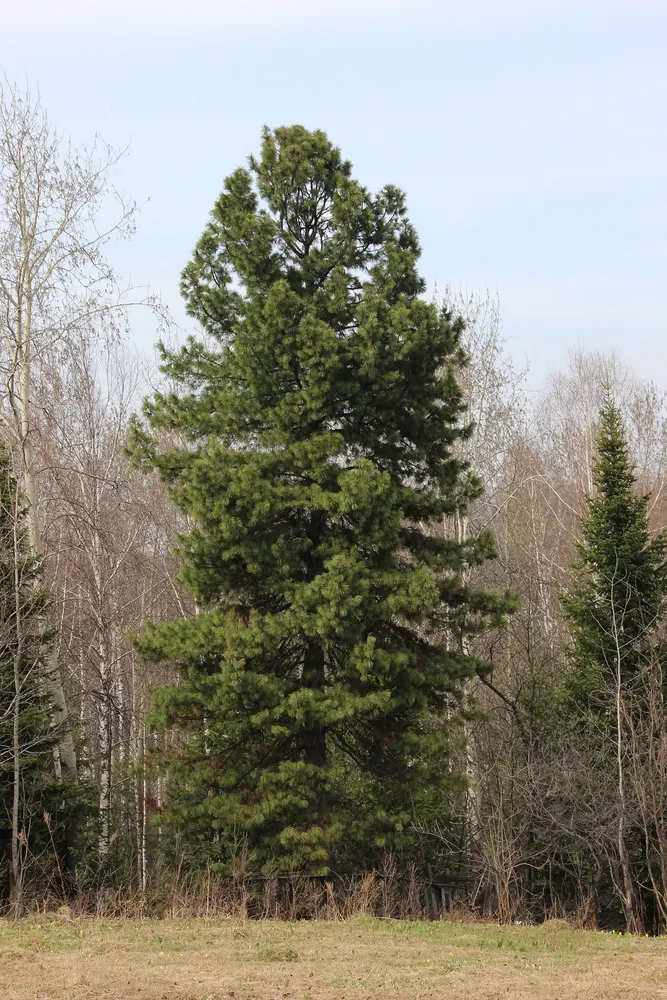
Photo: Vladlen Terezhe, CC BY-SA 4.0 (via Wikimedia Commons)
Siberian Pine (Siberian Cedar)
Pinus sibirica
Also known as Siberian Cedar, Siberian Stone Pine, Cedar Pine, Kedr (Russian)
Key benefits
✦Traditional uses
✦For the peoples of the Siberian taiga, this towering pine was less a tree than a pantry and a pharmacy standing in the snow. Its oil-rich nuts, gathered from the heavy cones each autumn, were pressed for oil, eaten raw, or ground into a nourishing paste that helped families through brutal winters when little else grew. The needles were steeped into a sharp, resinous tea that Siberian hunters and travelers relied on for warmth and vitality on long journeys, while the sticky golden resin was pressed onto cuts and sores as a traditional field remedy. Village healers also passed down the practice of breathing the steam from simmered needles to ease winter chest troubles.
How to grow & use it
✦The full apothecary for Siberian Pine (Siberian Cedar)
Traditional remedies and step-by-step preparations, a complete growing guide, and how to harvest, dry, and store it, all unlocked with HerbLens Unlimited.
- ✦Remedies & preparations
- ✦ Growing guide
- ✦Harvest & storage
From under $6 a month. Free plant identifications always included.
- ✦Rosehip
- ✦Spruce Tip
- ✦Ginger
- ✦Scots Pine
- ✦Eastern White Pine
“For the deep hush of the taiga, and a tree that has fed and warmed a people for centuries.”
A single Siberian pine can take up to 60 years before it produces its first cone, which is one reason the tree became a symbol of patience and provision passed down through generations in Siberian villages.
Siberian pine needles and resin are generally safe when correctly identified, but the tree can be confused with toxic conifers like yew, so be certain before foraging. Resin can irritate sensitive skin, and pine needle tea has traditionally been avoided during pregnancy.