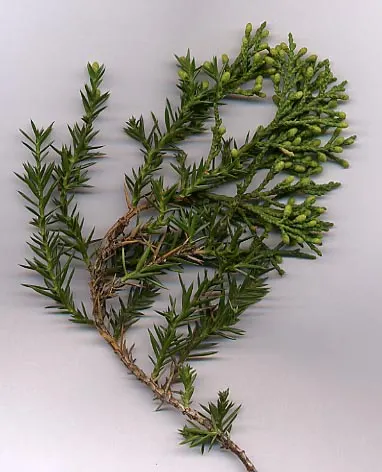
Photo: MPF at English Wikipedia, CC BY-SA 3.0 (via Wikimedia Commons)
Chinese Juniper
Juniperus chinensis
Also known as Hollywood Juniper, Kaizuka Juniper
Key benefits
✦Traditional uses
✦Chinese juniper has been treasured for centuries in the classical gardens of China and Japan, where its ability to hold deep green color through the harshest winters made it a living emblem of endurance and long life. Generations of bonsai artists have trained its twisting trunk and scale-like foliage into miniature landscapes, and it remains one of the most beloved species for the art form anywhere in the world. In parts of Asia its resinous wood and foliage were burned as incense in temple and household ceremonies, valued for a clean, woodsy scent thought to purify a space. Unlike its cousin the common juniper, whose blue berries flavor gin and hearty stews, Chinese juniper has never held a place as a culinary or medicinal herb in traditional practice, its gifts were always those of the garden rather than the kitchen or the medicine chest.
How to grow & use it
✦The full apothecary for Chinese Juniper
Traditional remedies and step-by-step preparations, a complete growing guide, and how to harvest, dry, and store it, all unlocked with HerbLens Unlimited.
- ✦Remedies & preparations
- ✦ Growing guide
- ✦Harvest & storage
From under $6 a month. Free plant identifications always included.
- ✦Boxwood
- ✦Azalea
- ✦Japanese maple
- ✦Arborvitae (Thuja)
- ✦Cypress (Cupressus)
“When you want a living piece of the garden that only grows more handsome with time.”
Some of the oldest bonsai in Japanese and Chinese collections, passed down through five or more generations of a single family, are Chinese junipers, chosen precisely because their trunks weather, twist, and grow more beautiful with age.
Chinese juniper is an ornamental species, not the culinary juniper berry used in cooking; its foliage, sap, and berry-like cones contain irritant oils that can redden skin or irritate the mouth and stomach if chewed or swallowed. Keep pets and children from mouthing clippings or fallen berries, and do not ingest this plant.