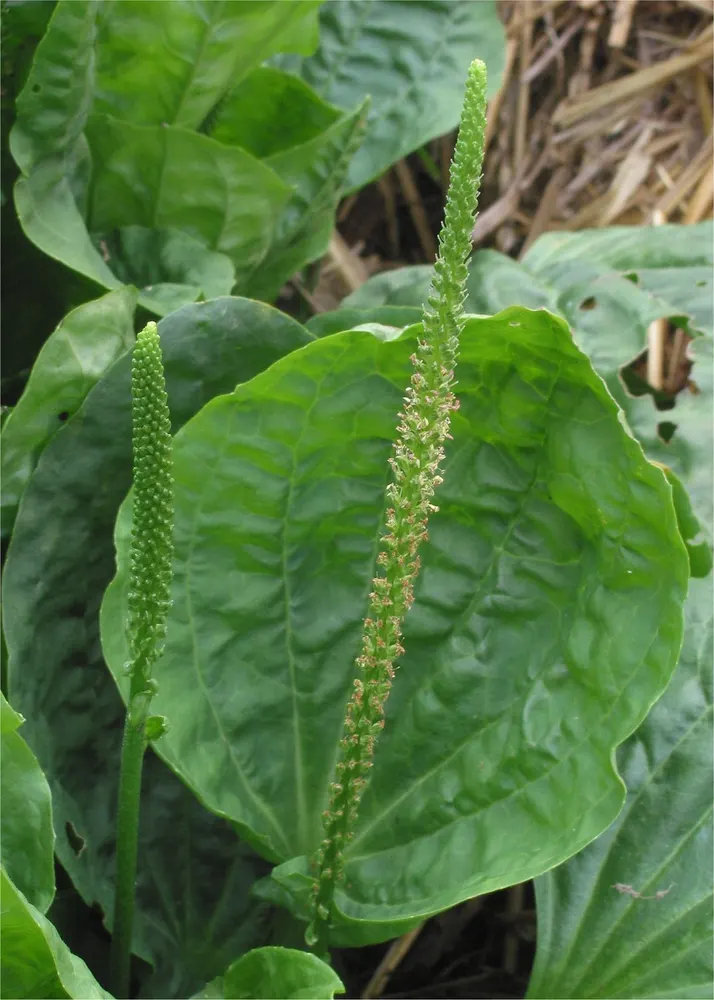
Photo: Rasbak, CC BY-SA 3.0 (via Wikimedia Commons)
Plantain
Plantago major
Also known as Broadleaf plantain, Common plantain, Waybread, White man's footprint, Greater plantain
Key benefits
✦Traditional uses
✦Plantain has been treasured as a humble healing weed for centuries, so constant a presence in folk medicine that Anglo-Saxon healers named it among the nine sacred herbs in their Nine Herbs Charm and called it waybread for its habit of growing along every well worn path. Long before modern gardens existed, people simply reached down, plucked a leaf from underfoot, and pressed it to a sting or scrape. Its story is one of humility and constancy, a plant so common it was easy to overlook, yet so useful it earned a place in nearly every traditional home remedy kit across Europe and, later, the Americas.
How to grow & use it
✦The full apothecary for Plantain
Traditional remedies and step-by-step preparations, a complete growing guide, and how to harvest, dry, and store it, all unlocked with HerbLens Unlimited.
- ✦Remedies & preparations
- ✦ Growing guide
- ✦Harvest & storage
From under $6 a month. Free plant identifications always included.
- ✦Calendula
- ✦Yarrow
- ✦Comfrey
- ✦Comfrey leaf
- ✦Chickweed
“For the scrape on the trail, the sting in the garden, reach for the weed already growing at your feet.”
Wherever European settlers traveled across North America, this humble weed seemed to follow, sprouting up along new paths and trade routes so reliably that several Native American nations came to call it white man's footprint.
Plantain is generally well tolerated for topical use and occasional tea, though it contains vitamin K and may interact with blood thinners like warfarin. Avoid leaves gathered from roadsides or lawns treated with pesticides.