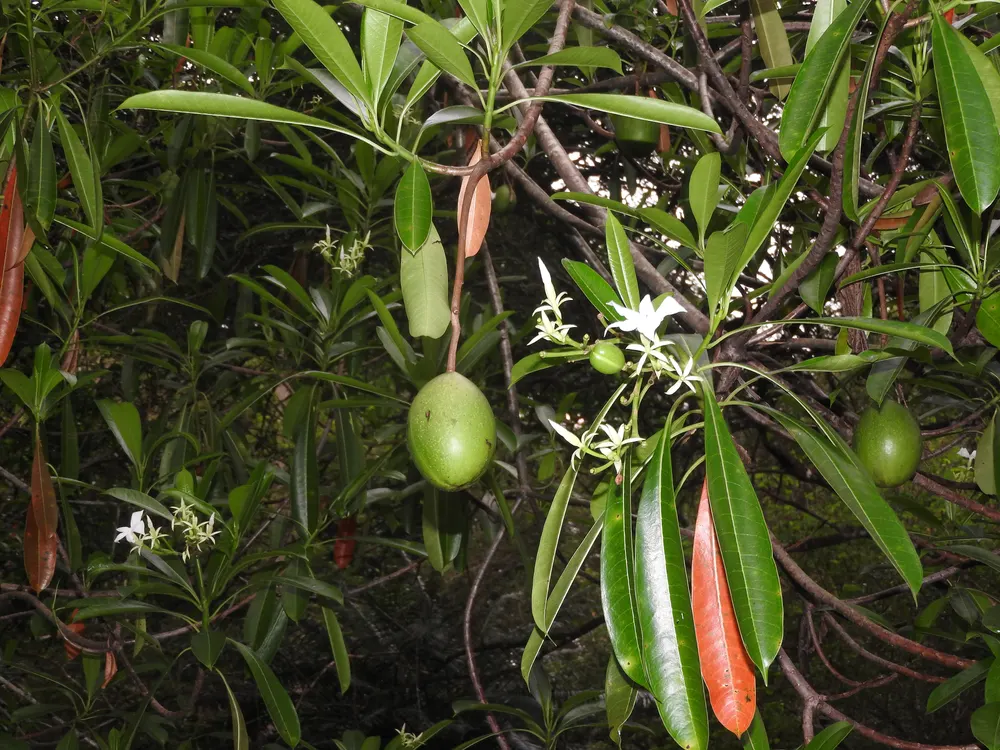
Photo: Yercaud-elango, CC BY-SA 4.0 (via Wikimedia Commons)
Sea Mango
Cerbera manghas
Also known as Sea Mango, Cerbera Tree, Grey Milkwood (regional), Pink-Eyed Cerbera, Tanghinia venenifera
Traditional uses
✦Cerbera manghas has long stood at the edge of the tide line across the Indo-Pacific, its fragrant white flowers and buoyant, mango-shaped fruit making it a familiar sight on beaches from Madagascar to the Pacific Islands. Coastal communities noticed early on that the seeds float and drift for great distances on ocean currents, which is how the tree spread island to island long before people ever planted it. Because every part of the plant carries potent cardiac toxins, its traditional value was never as a medicine to swallow. Instead, it was respected and feared in equal measure, known in various regions as a source of fish poison, rodent poison, and, tragically, as an agent used in intentional poisonings, a grim reputation shared with its close relative Cerbera odollam.
How to grow & use it
✦The full apothecary for Sea Mango
Traditional remedies and step-by-step preparations, a complete growing guide, and how to harvest, dry, and store it, all unlocked with HerbLens Unlimited.
- ✦Remedies & preparations
- ✦ Growing guide
- ✦Harvest & storage
From under $6 a month. Free plant identifications always included.
“A tree for admiring from a distance, fragrant white blossoms and glossy leaves along the shoreline, its beauty never meant to be tasted.”
The buoyant, corky fruit of Cerbera manghas is built like a tiny life raft, which is exactly how the species colonized so much of the Indo-Pacific coastline, drifting on ocean currents from beach to beach long before humans ever carried it anywhere.
Cerbera manghas is genuinely dangerous and should never be eaten in any form. All parts of the tree, especially the seeds, bark, and milky sap, contain potent cardiac glycosides (including cerberin) that disrupt heart rhythm and can cause fatal cardiac arrest even in small amounts. The sap can also irritate skin and eyes on contact. This species has a documented history of use in fish poisoning, rodent control, and tragically in cases of intentional and accidental poisoning across the Indo-Pacific, a reputation it shares with its close relative Cerbera odollam, sometimes called the suicide tree. There is no safe traditional preparation of this plant for internal use, and it should be kept well away from children, pets, and livestock. If ingestion is suspected, treat it as a medical emergency and contact poison control or emergency services immediately rather than attempting any home remedy.