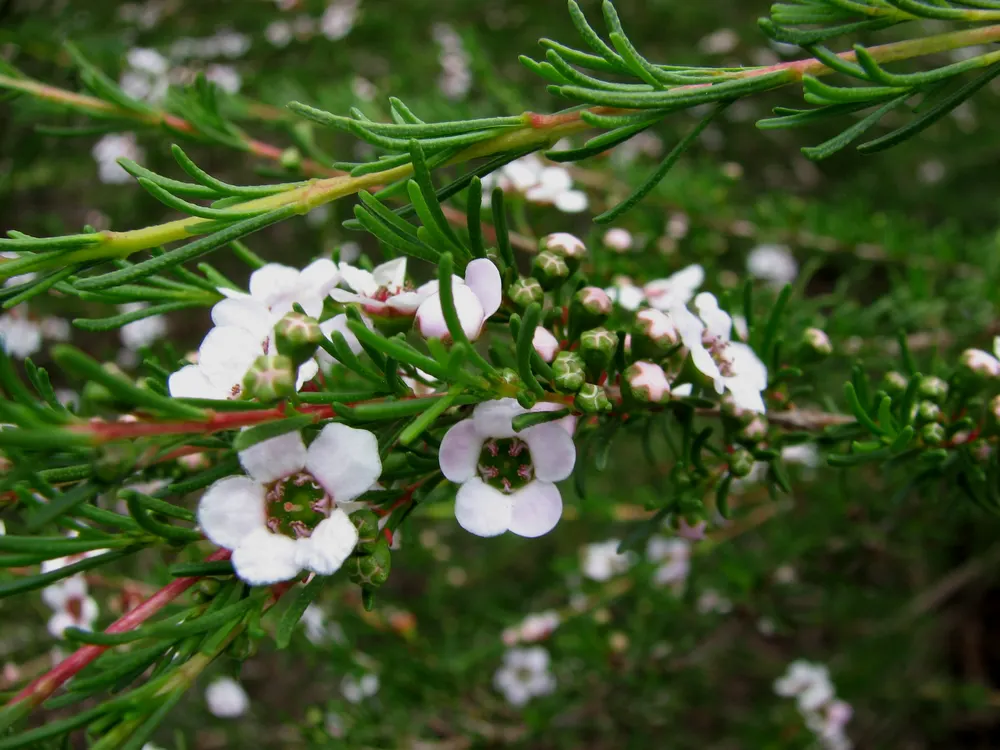
Photo: Melburnian, CC BY-SA 3.0 (via Wikimedia Commons)
Astartea
Astartea fascicularis
Also known as Spiked Wax Flower, Common Astartea
Key benefits
✦Traditional uses
✦Astartea fascicularis grows wild along the creek banks and winter-wet flats of southwestern Australia, where its wiry stems and starry white to pale pink blossoms have long marked the damp, unglamorous corners of the bush that showier plants avoid. It does not carry a documented history as a medicinal or culinary herb, and no traditional remedies are recorded for it. Its real tradition is a horticultural one: Australian native plant growers have prized it for generations as a dependable, water-loving shrub, and it remains a familiar sight in bush regeneration and wetland restoration plantings across the region, where its months of flowers feed bees long after other natives have finished for the season.
How to grow & use it
✦The full apothecary for Astartea
Traditional remedies and step-by-step preparations, a complete growing guide, and how to harvest, dry, and store it, all unlocked with HerbLens Unlimited.
- ✦Remedies & preparations
- ✦ Growing guide
- ✦Harvest & storage
From under $6 a month. Free plant identifications always included.
- ✦Kunzea
- ✦Leptospermum (tea tree)
- ✦Native sedges
- ✦Chamelaucium (Geraldton wax)
- ✦Baeckea
“For the wet, tricky corner of the garden where nothing else wants to bloom this long.”
The genus Astartea was named after Astarte, the ancient Phoenician and Canaanite goddess of love and fertility, a nod from early botanists to the delicate, star-shaped charm of its flowers.
Astartea has no history as a food or medicine and is grown only as an ornamental, so it is not eaten or brewed.