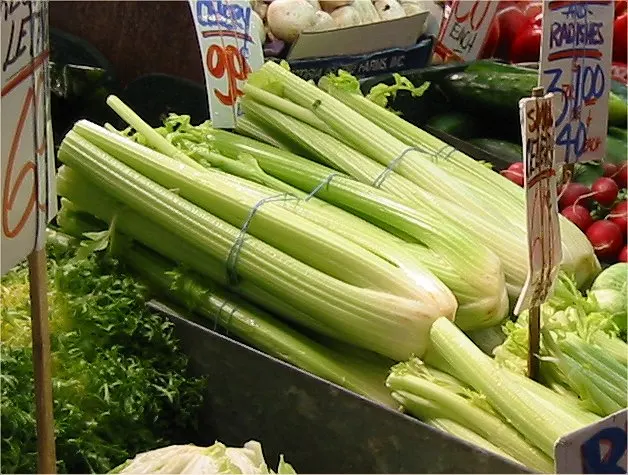
Photo: Eric Hunt, CC BY 2.5 (via Wikimedia Commons)
Celery
Apium graveolens
Also known as Smallage, Wild Celery, Celery Seed (for the seed form)
Key benefits
✦Traditional uses
✦Celery's story stretches back to antiquity, when it grew wild along Mediterranean shorelines and was prized as medicine long before anyone thought to eat it as food. Ancient Egyptians wove it into funerary garlands, and traces have even been found in Tutankhamun's tomb. Greek and Roman healers turned to the seed as a traditional remedy for sluggish digestion and water retention, while later herbalists across Europe and Asia came to rely on celery seed as a traditional support for joint stiffness and for what was once called cleansing the blood. Through it all, celery held a quiet, steady place in the herbalist's cupboard, valued as much for its gentle nature as for its crisp, green bite.
How to grow & use it
✦The full apothecary for Celery
Traditional remedies and step-by-step preparations, a complete growing guide, and how to harvest, dry, and store it, all unlocked with HerbLens Unlimited.
- ✦Remedies & preparations
- ✦ Growing guide
- ✦Harvest & storage
From under $6 a month. Free plant identifications always included.
- ✦Parsley
- ✦Fennel
- ✦Ginger
- ✦Lovage
- ✦Fennel seed
“When you want a crisp, cooling companion for the kitchen and a gentle traditional ally for digestion and tired joints.”
For most of its long history, celery was not eaten as a vegetable at all. It was grown almost entirely as a medicinal herb and flavoring, the ancient Greeks even wove it into victory garlands, and it was not until the seventeenth century, when Italian and French gardeners bred a milder, less bitter stalk, that people began eating it the way we do today.
Celery is a recognized major allergen and can cause reactions from mild itching to severe anaphylaxis, especially in people who react to birch or mugwort pollen. Medicinal-strength celery seed has traditionally been avoided in pregnancy and can interact with diuretics, blood thinners, and blood pressure medication.