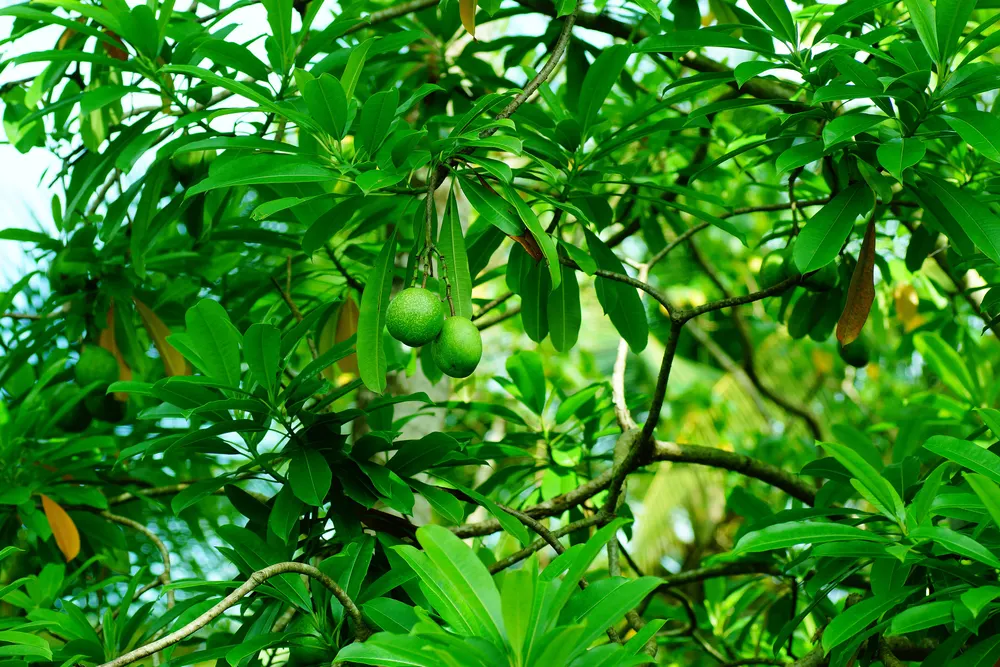
Photo: Vengolis, CC BY-SA 3.0 (via Wikimedia Commons)
Suicide Tree
Cerbera odollam
Also known as Othalanga, Pong-pong Tree, Sea Mango, Cerbera Tree
Traditional uses
✦Cerbera odollam has a long and sober history in the coastal communities of India, Sri Lanka, and Southeast Asia, but not as a healing plant. Its crushed seeds and bitter sap were traditionally employed as a fish poison, stunning or killing fish in still water so they could be gathered easily, and as an arrow or ordeal poison in some regions. In the Indian state of Kerala, where the tree grows abundantly along backwaters, its small green fruit became so infamously associated with fatal poisonings, both accidental and intentional, that toxicologists gave it the grim nickname the suicide tree. There is no credible tradition of Cerbera odollam being taken as a remedy, and none should ever be attempted.
How to grow & use it
✦The full apothecary for Suicide Tree
Traditional remedies and step-by-step preparations, a complete growing guide, and how to harvest, dry, and store it, all unlocked with HerbLens Unlimited.
- ✦Remedies & preparations
- ✦ Growing guide
- ✦Harvest & storage
From under $6 a month. Free plant identifications always included.
“A tree to know and recognize, never to gather from.”
The tree's fruit looks like a small, unripe green mango, which is part of why it has caused so many accidental poisonings among children and foragers. Its toxin, cerberin, is a cardiac glycoside that disrupts the heart's electrical rhythm, and because it is not part of routine toxicology screening, researchers studying poisoning cases in Kerala have called it a nearly undetectable poison.
Cerbera odollam is one of the most lethal plants known, and every part of it, especially the kernel inside its green, mango-like fruit, is highly poisonous. Its seeds contain cerberin, a potent cardiac glycoside that disrupts the heart's electrical signaling and can cause fatal cardiac arrhythmia within hours of ingestion; there is no reliable antidote once significant poisoning occurs. It is responsible for a substantial number of fatal poisonings, both accidental and intentional, in South and Southeast Asia each year, which is how it earned the name the suicide tree. The sap can also irritate skin and eyes on contact. This plant should never be ingested, prepared as a tea or tincture, or used in any home remedy, and it is not appropriate for households with children, pets, or livestock. If exposure or ingestion is suspected, treat it as a medical emergency and seek immediate care from a poison control center or emergency medical professional; this entry is offered for identification and awareness only, not as guidance for use.