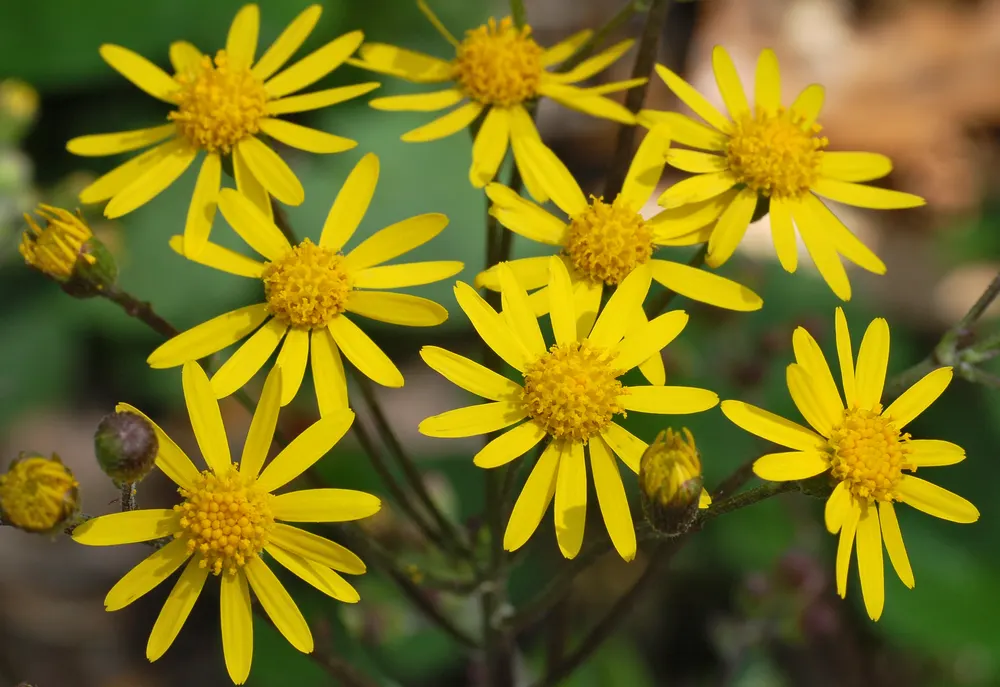
Photo: Photo by and (c)2007 Derek Ramsey (Ram-Man), GFDL 1.2 (via Wikimedia Commons)
Golden Ragwort
Packera aurea
Also known as Life Root, Squaw Weed, Golden Groundsel, False Valerian, Ragweed (regional, not true ragweed)
Traditional uses
✦Golden ragwort earned its old nickname life root from generations of Appalachian and Native herbalists who turned to its root for women's health complaints, and it appears in nineteenth century Eclectic medical texts as a uterine tonic. It was also rubbed into poultices for wounds and bruises in some folk traditions. Modern research into this plant family has since raised serious concerns that temper how it should be regarded today, so its story is best appreciated as history rather than as a guide for use.
How to grow & use it
✦The full apothecary for Golden Ragwort
Traditional remedies and step-by-step preparations, a complete growing guide, and how to harvest, dry, and store it, all unlocked with HerbLens Unlimited.
- ✦Remedies & preparations
- ✦ Growing guide
- ✦Harvest & storage
From under $6 a month. Free plant identifications always included.
- ✦Red raspberry leaf (for traditional women's health support)
- ✦Calendula (for traditional wound care)
“A cheerful golden skirt for the shady, damp corner of the garden where little else wants to bloom.”
The name life root traveled with golden ragwort through decades of American herbal trade catalogs, yet the very pyrrolizidine alkaloids that made it a fixture in old apothecary cabinets are the same compounds that quietly ended its popularity once modern liver toxicology caught up with folklore.
Golden ragwort contains pyrrolizidine alkaloids (PAs), naturally occurring compounds known to be hepatotoxic, meaning they can damage the liver with repeated or excessive exposure, and some PAs are classified as carcinogenic with long-term use. These alkaloids can also cross into breast milk and are considered unsafe during pregnancy and breastfeeding. Because of this, internal use of golden ragwort in any tea, tincture, or extract is not advised, and it should not be taken alongside other liver-affecting medications or supplements. This entry is shared for its botanical and historical interest only, and should not be treated as a guide for ingestion. Please consult a qualified healthcare provider or clinical herbalist before considering any use of this plant.