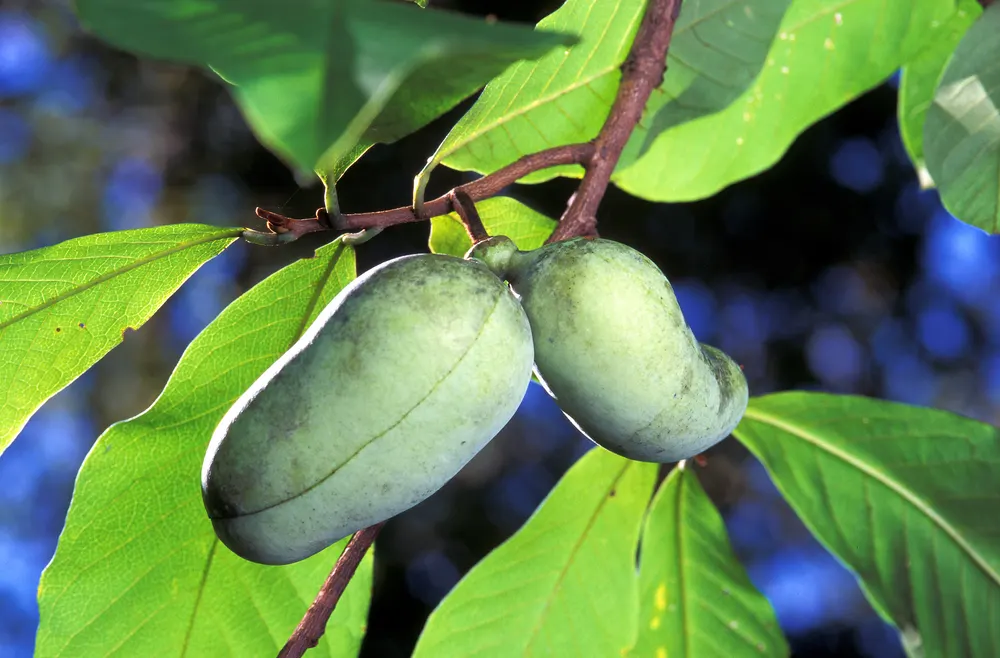
Photo: Scott Bauer, USDA, Public domain (via Wikimedia Commons)
Pawpaw
Asimina triloba
Also known as Common Pawpaw, Custard Apple, Poor Man's Banana, Hoosier Banana, False Banana
Key benefits
✦Traditional uses
✦Pawpaw is the largest fruit native to North America, and it has fed people along its range for a very long time. Indigenous nations including the Cherokee, Iroquois, and many others gathered, ate, and dried pawpaw fruit, wove rope and fishing nets from the tree's fibrous inner bark, and helped spread the species by carrying its seeds along travel routes. Early European settlers and figures like George Washington and Thomas Jefferson were fond of the fruit, and it fed families and foragers through long American seasons before refrigerated shipping made tropical fruit common. Unlike most entries in an herbal cabinet, pawpaw's traditional value was almost entirely culinary rather than medicinal, a beloved wild dessert fruit rather than a remedy.
How to grow & use it
✦The full apothecary for Pawpaw
Traditional remedies and step-by-step preparations, a complete growing guide, and how to harvest, dry, and store it, all unlocked with HerbLens Unlimited.
- ✦Remedies & preparations
- ✦ Growing guide
- ✦Harvest & storage
From under $6 a month. Free plant identifications always included.
- ✦Vanilla
- ✦Cinnamon
- ✦Nutmeg
- ✦Ripe banana
- ✦Mango
“You want a taste of the wild American understory, custardy, tropical, and utterly unlike anything on a grocery shelf.”
Pawpaw seeds are believed to have been carried and dispersed across eastern North America partly by now-extinct Ice Age megafauna like giant ground sloths and mastodons, which may explain why the tree produces such an unusually large, rich fruit for its modest size.
The ripe fruit is a safe, well-loved food, though some people get an allergic reaction to it, with itching or swelling around the mouth. The seeds, twigs, bark, and leaves contain neurotoxic compounds and should never be eaten, chewed, or brewed. Handling the leaves or fruit skin can also irritate sensitive skin.