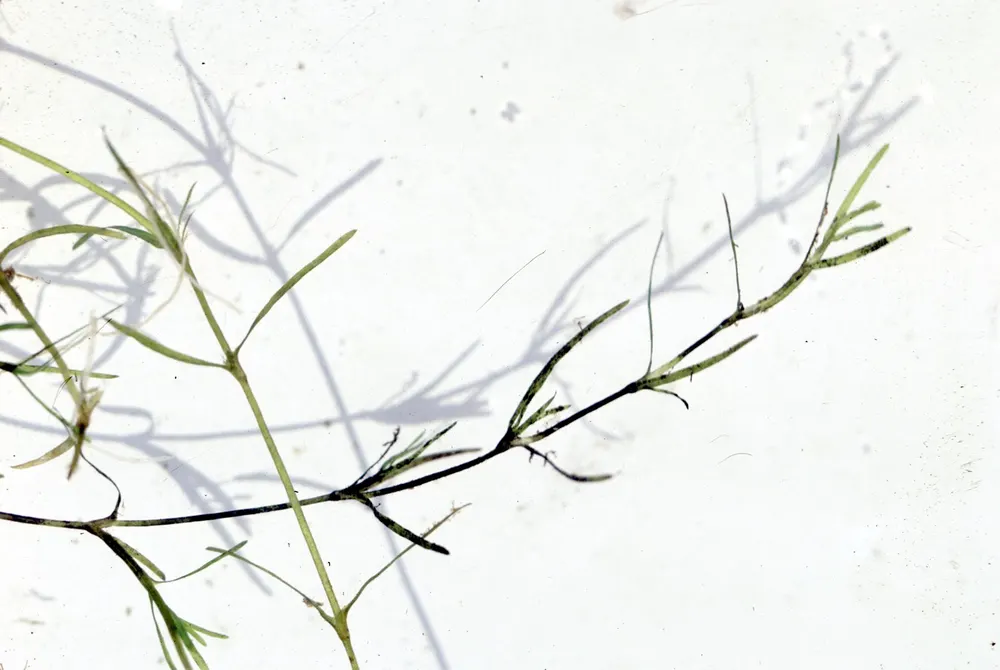
Photo: Robert H. Mohlenbrock @ USDA-NRCS PLANTS Database / USDA NRCS. 1995. Northeast wetland flora: Field office guide to plant species. Northeast National Technical Center, Chester., Public domain (via Wikimedia Commons)
Slender Naiad
Najas flexilis
Also known as Nodding Waternymph, Wavy Naiad, Northern Naiad
Key benefits
✦Traditional uses
✦Slender naiad has never been an herb of the kitchen or the medicine chest. Its real legacy is ecological rather than herbal, it has long been prized quietly by naturalists, waterfowl hunters, and lake managers as one of the finest natural foods for diving ducks, especially canvasbacks, which were once so associated with naiad-rich lakes that good naiad beds were considered a sign of good duck hunting grounds. Botanists and conservationists have also come to value it as a kind of living barometer, since it tends to disappear from lakes as water clarity and quality decline, so a healthy stand of it is quietly good news for a lake. It is a plant more people have benefited from without ever knowing its name than one anyone gathered for themselves.
How to grow & use it
✦The full apothecary for Slender Naiad
Traditional remedies and step-by-step preparations, a complete growing guide, and how to harvest, dry, and store it, all unlocked with HerbLens Unlimited.
- ✦Remedies & preparations
- ✦ Growing guide
- ✦Harvest & storage
From under $6 a month. Free plant identifications always included.
“For the quiet, hidden green world drifting just beneath still water.”
Najas takes its name from the Naiads of Greek myth, the water nymphs said to inhabit springs, streams, and lakes, a fitting name for a plant that spends its entire life submerged and is rarely ever seen above the surface.
Slender naiad is not eaten and has no history of medicinal use; it is not known to be toxic.