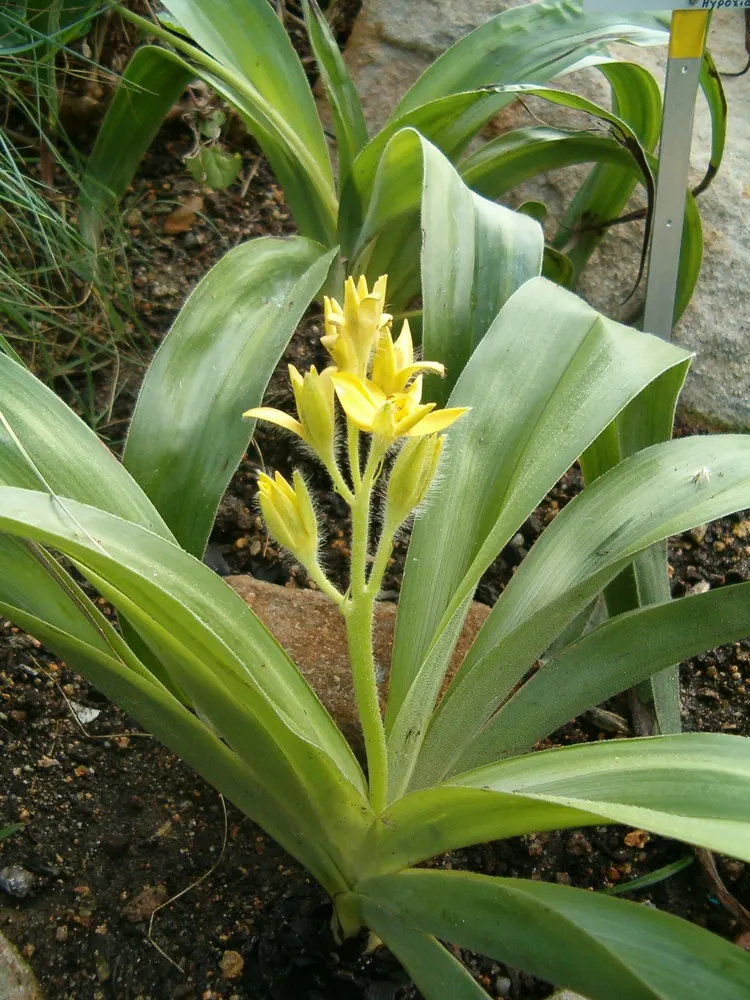
Photo: CC BY-SA 3.0 (via Wikimedia Commons)
African Potato
Hypoxis hemerocallidea
Also known as Star Flower, Sterretjie, Inkomfe, Ilabatheka, Yellow Star Grass
Key benefits
✦Traditional uses
✦Long before it carried the name African Potato, this modest little grassland plant was known to Zulu, Xhosa, and Sotho healers as a trusted tonic corm, dug from the veld and simmered into decoctions for weakness, urinary complaints, and as a general strengthener during illness. Its bitter, fibrous corm has nothing to do with the true potato it is named for, the resemblance is only in the shape of the root, but the plant earned its common name from settlers who saw it dug from the ground much the way one would harvest a potato. Interest in the plant grew widely across South Africa in the late twentieth century, when it became one of the most widely reached for herbs for immune support, and it remains a familiar sight in traditional medicine markets across the region to this day. Its cheerful six-pointed yellow flowers, opening flat like little stars across the grass, are part of what earned it the Afrikaans name sterretjie, or little star.
Growing guide
✦Fresh to dried
✦Traditional preparations
✦African Potato Corm Decoction
A traditional simmered preparation from the dried corm, used as a general tonic in southern African herbal practice.
How it's made. Traditionally, a decoction is made by simmering 1 to 2 teaspoons of thinly sliced dried corm in 2 cups (500 ml) of water for 15 to 20 minutes, then straining and taking in small amounts, no more than a small cup at a time.
Fresh Corm Poultice
A folk first-aid application using the bruised fresh corm on minor skin irritations.
How it's made. Traditionally, a small piece of fresh corm is crushed and applied directly to the skin as a simple poultice, covered lightly with cloth.
- ✦Cancer bush (Sutherlandia frutescens)
- ✦Umckaloabo (Pelargonium sidoides)
- ✦Ginger
- ✦Echinacea
- ✦Astragalus
“For the grounded, time-worn tonic of the southern African veld, dug from the earth and steeped the old way.”
Despite its name and potato-like corm, African Potato is not related to the true potato at all, it belongs to the star-grass family Hypoxidaceae and is named for its bright, six-petaled flowers that look like tiny yellow stars scattered through the grass.
African potato's corm affects liver enzyme pathways and can interact with antiretroviral drugs, immunosuppressants, and other liver-processed medications, so it should never be combined with prescription medicine without medical guidance. It stimulates immune activity, so it's avoided by organ transplant recipients and those with autoimmune conditions, and prolonged high-dose use has been linked to liver strain. It's also best avoided during pregnancy and breastfeeding.