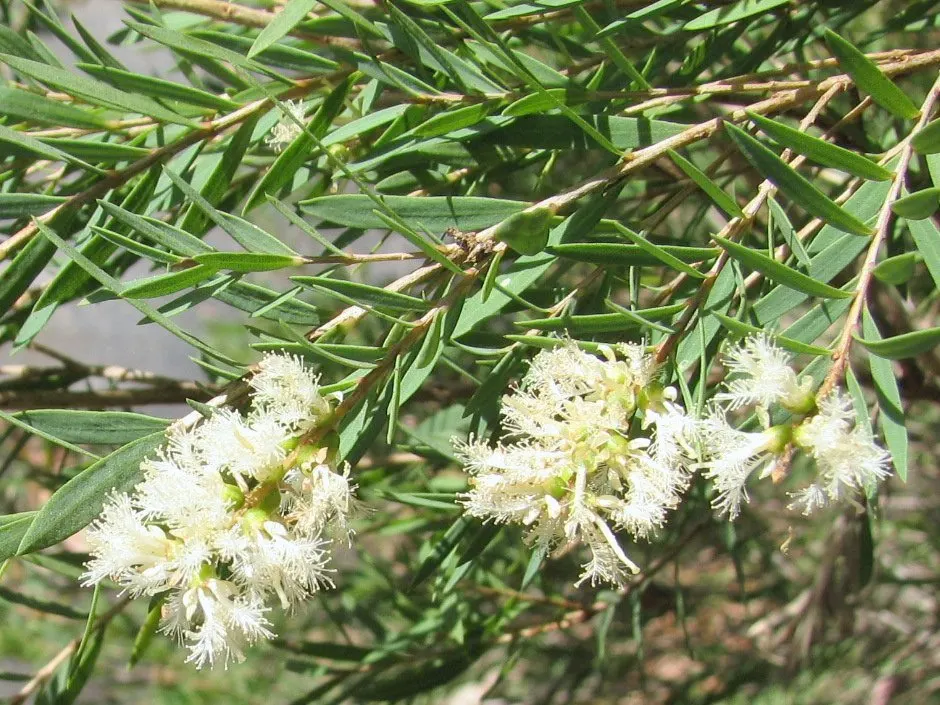
Photo: Eug, CC BY 3.0 (via Wikimedia Commons)
Flax-leaved Paperbark
Melaleuca linariifolia
Also known as Narrow-leaved Paperbark, Snow-in-Summer, Flax-leaved Tea Tree
Key benefits
✦Traditional uses
✦Long before it had a Latin name, the Aboriginal peoples of eastern Australia relied on this tree for far more than medicine. Its thick, papery bark peels away in soft layers and was used to wrap food for cooking in earth ovens, to line coolamons and cradles, and to thatch simple shelters. The aromatic, oil-rich leaves were crushed and inhaled or applied as a folk remedy for congestion and minor skin troubles, a practice that European settlers later adopted and refined. Early sailors who steeped the leaves of melaleuca trees for a bracing, medicinal-tasting tea are part of why this whole family of trees came to be called tea trees.
How to grow & use it
✦The full apothecary for Flax-leaved Paperbark
Traditional remedies and step-by-step preparations, a complete growing guide, and how to harvest, dry, and store it, all unlocked with HerbLens Unlimited.
- ✦Remedies & preparations
- ✦ Growing guide
- ✦Harvest & storage
From under $6 a month. Free plant identifications always included.
- ✦Eucalyptus
- ✦Lavender
- ✦Tea tree (Melaleuca alternifolia)
- ✦Tea tree oil (Melaleuca alternifolia)
- ✦Eucalyptus
“For the clean, resinous scent of an old bark-and-steam bush medicine, wrapped in a tree as beautiful as it is useful.”
The multi-layered, tissue-soft bark of this tree was so useful to Aboriginal Australians for wrapping, lining, and shelter-building that early colonists simply started calling every tree like it a paperbark.
Like other tea tree type oils, this one is toxic if swallowed, even in small amounts, and poses a risk to children and pets. Dilute before skin use and patch test first, since undiluted oil can irritate skin.