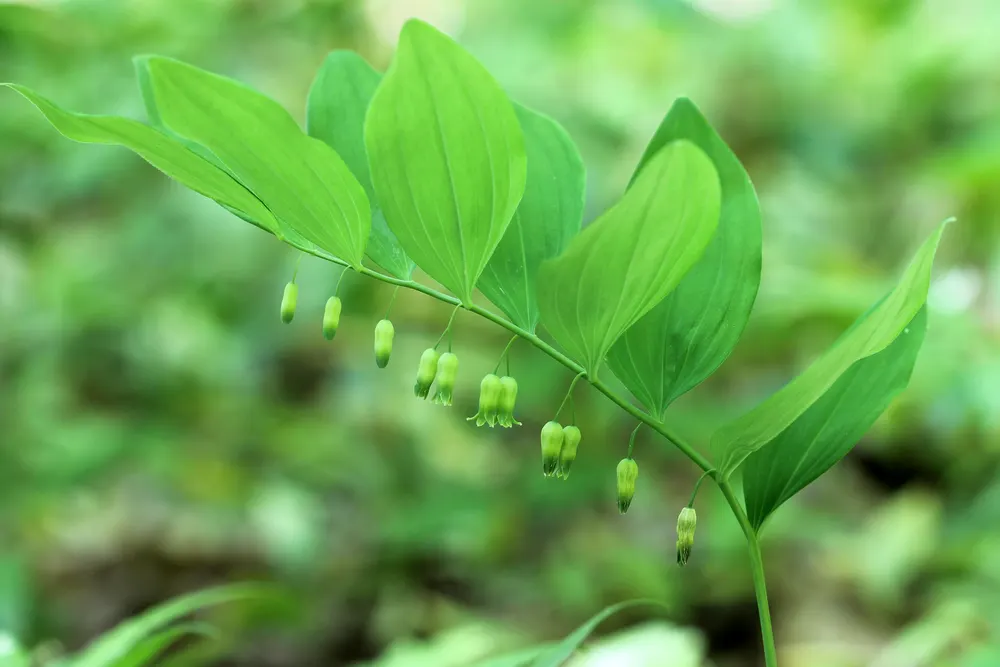
Photo: Rob Routledge, Sault College, Bugwood.org, CC BY 3.0 us (via Wikimedia Commons)
Downy Solomon's Seal
Polygonatum pubescens
Also known as Hairy Solomon's Seal, Small Solomon's Seal, King Solomon's Seal
Key benefits
✦Traditional uses
✦Long before it graced shade gardens, downy Solomon's seal was a quiet workhorse in the medicine bundles of several Native American nations, including the Cherokee and Iroquois, who dug its knotted rhizome each fall and relied on it to soothe bruises, sprains, and swollen joints. The root was also simmered into a mild tonic for upset stomachs and general aches, while the tender young shoots, harvested in earliest spring, were cooked and eaten much like asparagus. Its arching stems and dangling flowers made it easy to recognize in the dappled woods, and generations of foragers passed down the same gentle, unhurried respect for a plant that takes its time to grow.
How to grow & use it
✦The full apothecary for Downy Solomon's Seal
Traditional remedies and step-by-step preparations, a complete growing guide, and how to harvest, dry, and store it, all unlocked with HerbLens Unlimited.
- ✦Remedies & preparations
- ✦ Growing guide
- ✦Harvest & storage
From under $6 a month. Free plant identifications always included.
- ✦Ginger
- ✦Chamomile
- ✦Slippery Elm
- ✦True Solomon's Seal (Polygonatum biflorum)
- ✦Eurasian Solomon's Seal (Polygonatum multiflorum)
“For the quiet, storied woodland ally that has soothed bumps, bruises, and uneasy stomachs for generations.”
Each spring when the old stem dies back, it leaves behind a round scar on the rhizome that looks like the imprint of a wax seal, which is exactly where the plant gets its name, and by counting those scars along the root you can read off its age almost like counting rings in a tree.
Raw berries and fresh rhizome can cause nausea or stomach upset, so this plant is traditionally cooked or dried before use. Before flowering its leaves resemble true lily of the valley, which is toxic to the heart, so correct identification matters.