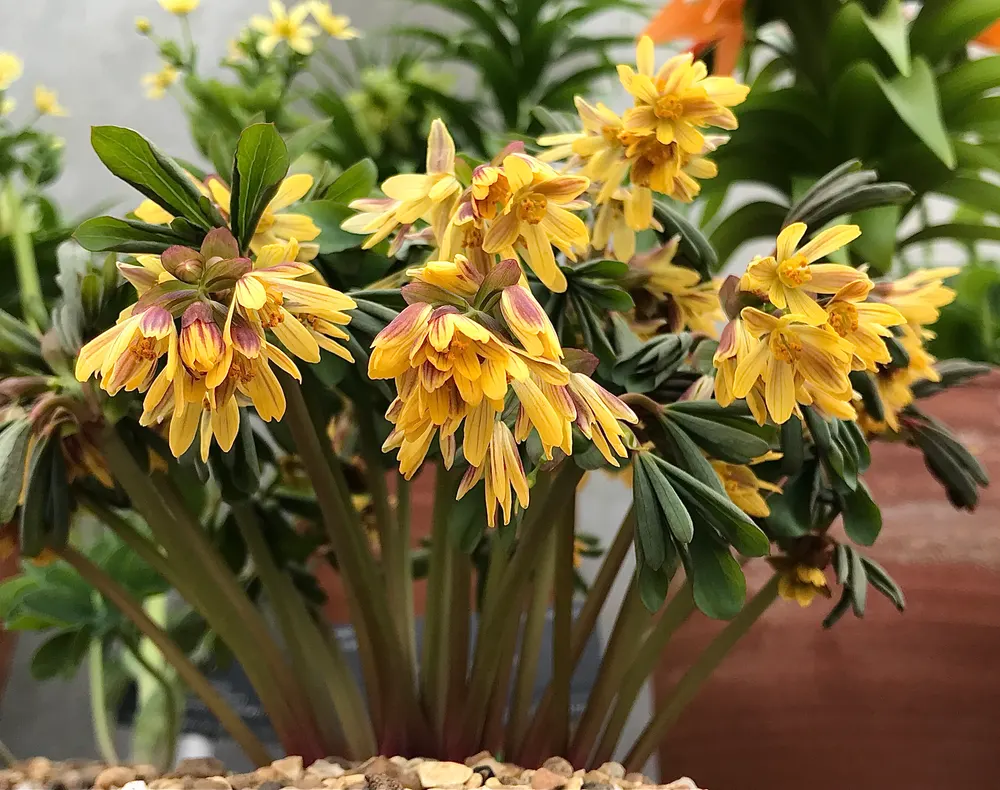
Photo: Flobbadob, CC BY-SA 4.0 (via Wikimedia Commons)
Albert's Gymnospermium
Gymnospermium albertii
Also known as Albert's leontice, Tian Shan gymnospermium
Key benefits
✦Traditional uses
✦Gymnospermium albertii belongs to a small, close-knit tribe of Berberidaceae, alongside Leontice and the North American blue cohosh, whose tubers carry a long, cautious reputation in folk medicine rather than a well-documented safe one. In parts of its Central Asian range, local healers are said to have used tubers from related Leontice and Gymnospermium species sparingly and externally, chiefly for aching joints, but records specific to this species are thin and largely undocumented in reliable ethnobotanical literature. Because the plant is rare, slow-growing, and increasingly threatened by habitat loss, most of what draws people to it today is its startling, almost impatient early bloom rather than any settled tradition of use. Where it survives, it is treated by botanists and conservationists as a plant to watch and protect, not to harvest.
Growing guide
✦Fresh to dried
✦- ✦Corydalis solida
- ✦Crocus tommasinianus
- ✦Eranthis hyemalis
- ✦Not used in herbal preparations; gardeners wanting a similarly early, jewel-like woodland bloomer often plant Crocus tommasinianus instead, which offers comparable timing without the safety concerns
“For the gardener who wants to watch the very first green push through the last of the snow.”
Gymnospermium is one of the most endangered plant genera of the Central Asian mountains. Several of its species, including close relatives of this one, are listed on national and regional Red Lists because their tubers were long dug for folk remedies, a pressure that, combined with a painfully slow life cycle, has pushed wild populations into serious decline.
This plant is not safe to eat; it belongs to a group that includes blue cohosh and Leontice, plants known for irritant, cardioactive alkaloids in their tubers, with a documented history of poisoning. Keep tubers away from children, pets, and livestock, and seek immediate medical help if ingestion is suspected.