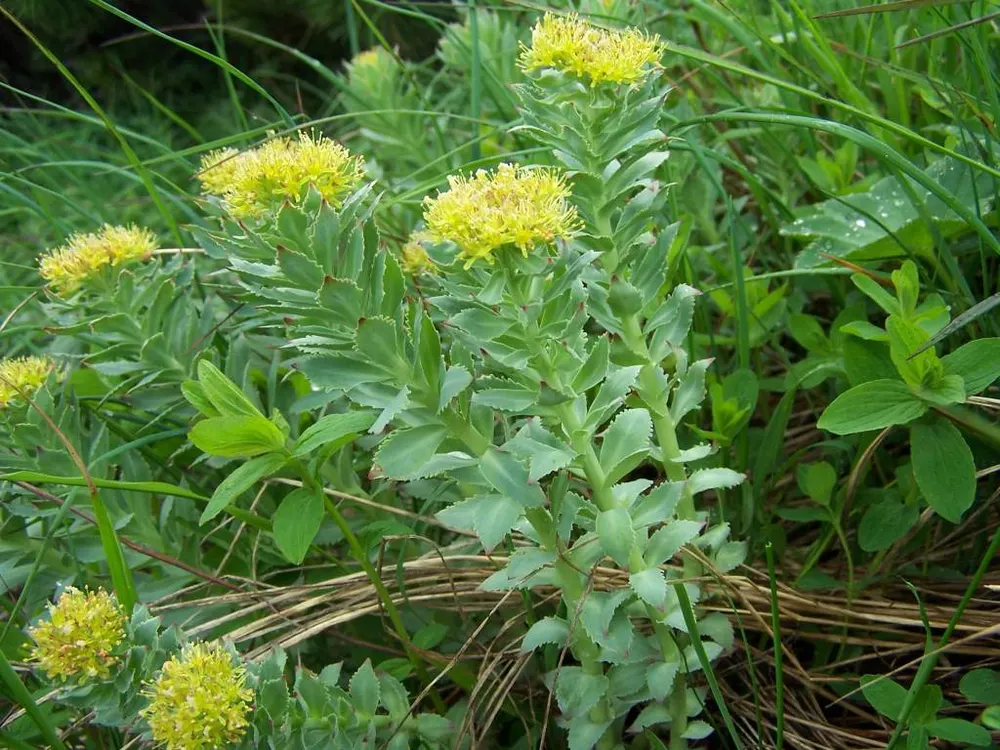
Photo: Opioła Jerzy, CC BY 2.5 (via Wikimedia Commons)
Roseroot
Sedum roseum
Also known as Golden Root, Arctic Root, Rosewort, Rhodiola
Key benefits
✦Traditional uses
✦Long before it was studied in modern labs, roseroot was quietly carried in the pockets of people who lived where little else would grow. Vikings are said to have chewed the root before long sea voyages to sustain their strength, and Siberian folk healers passed it down as a tonic for endurance through brutal winters, sometimes calling it golden root and treating it as a closely guarded secret between families. In Scandinavia it found its way into remedies for fatigue and low spirits, while traditional Chinese medicine valued it for supporting the body's resilience under strain. Its name comes from the Greek word for rose, rhodon, because a freshly cut root releases a faint, unmistakable rose-like scent.
How to grow & use it
✦The full apothecary for Roseroot
Traditional remedies and step-by-step preparations, a complete growing guide, and how to harvest, dry, and store it, all unlocked with HerbLens Unlimited.
- ✦Remedies & preparations
- ✦ Growing guide
- ✦Harvest & storage
From under $6 a month. Free plant identifications always included.
- ✦Eleuthero (Siberian ginseng)
- ✦Ashwagandha
- ✦Schisandra
- ✦Eleuthero (Siberian ginseng)
- ✦Ashwagandha
“When the days stretch long, the cold sets in, and you need steady, grounded stamina rather than a quick jolt.”
Roseroot's genus name, Rhodiola, comes from the Greek rhodon, meaning rose, because a freshly sliced root gives off a faint scent of roses, a detail that root diggers have used for centuries to confirm they'd found the real plant.
Roseroot is stimulating and can cause jitteriness or trouble sleeping if taken late in the day. Avoid it with bipolar disorder, use caution with antidepressants, MAOIs, or other stimulant medications, and skip it during pregnancy and breastfeeding.