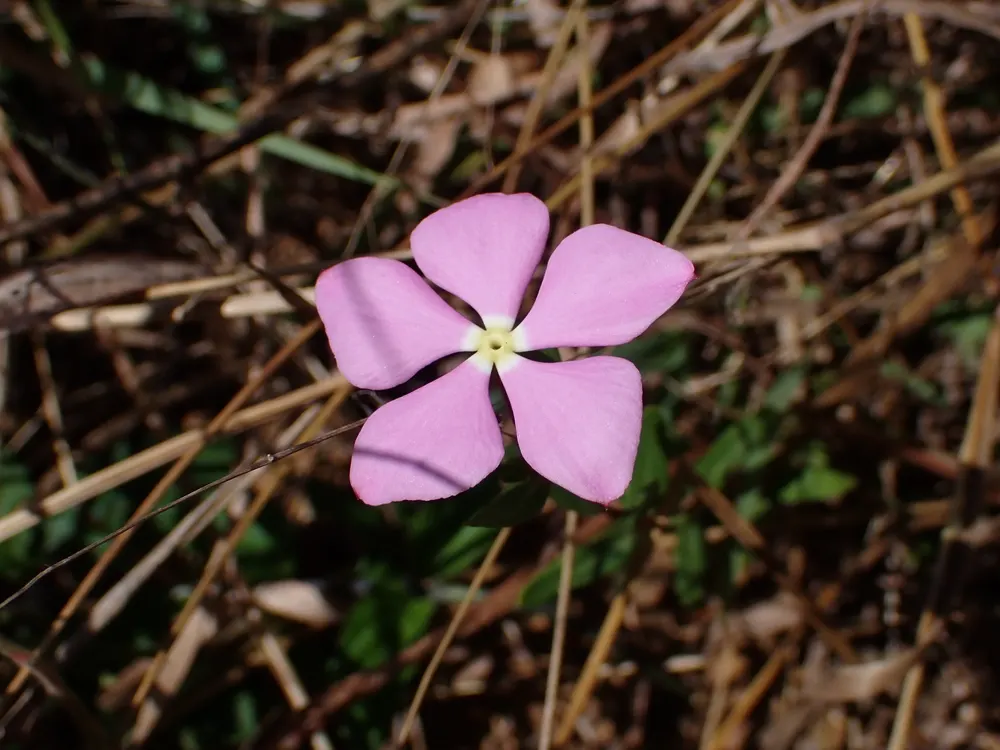
Photo: Louis Aureglia, CC BY 4.0 (via Wikimedia Commons)
Lance-leaf Periwinkle
Catharanthus lanceus
Also known as Lance-leaved Catharanthus, Madagascar Lance Periwinkle
Key benefits
✦Traditional uses
✦Catharanthus lanceus belongs to a small genus found almost nowhere outside Madagascar, and it shares that island home with its far more famous relative, the Madagascar periwinkle, whose folk use for ailments like diabetes eventually led researchers to the alkaloids vincristine and vinblastine, medicines that changed the course of cancer treatment. Catharanthus lanceus itself does not carry that same well-documented history of folk remedy, and no reliable traditional preparation has been passed down for it the way it has for its cousin. What it does carry is scientific curiosity, botanists studying the genus have looked closely at lanceus and its wild relatives while mapping how alkaloid chemistry varies from species to species across Madagascar's forests.
How to grow & use it
✦The full apothecary for Lance-leaf Periwinkle
Traditional remedies and step-by-step preparations, a complete growing guide, and how to harvest, dry, and store it, all unlocked with HerbLens Unlimited.
- ✦Remedies & preparations
- ✦ Growing guide
- ✦Harvest & storage
From under $6 a month. Free plant identifications always included.
- ✦Aloe
- ✦Euphorbia
- ✦Vinca minor (as a non-toxic ornamental groundcover alternative)
“A plant for the sunbaked corner of the garden, not for the medicine cabinet.”
Catharanthus lanceus grows wild only on Madagascar, alongside four or five other Catharanthus species found nowhere else on earth, and researchers have screened this whole small genus for its unusual alkaloids in the same way that scientists once combed through Catharanthus roseus and found the compounds that became modern chemotherapy drugs.
Catharanthus lanceus belongs to a genus well known for potent monoterpene indole alkaloids, the same class of compounds that make its relative Catharanthus roseus toxic if eaten and dangerous outside careful medical supervision. There is no established safe traditional dose or preparation for Catharanthus lanceus, and it should not be ingested, brewed, or self-administered in any form. Keep it away from children and pets who might chew on garden plants, and handle the sap with care since related species can irritate skin and eyes. If you have questions about this plant or its chemistry, please speak with a qualified botanist, toxicologist, or healthcare professional rather than experimenting at home.