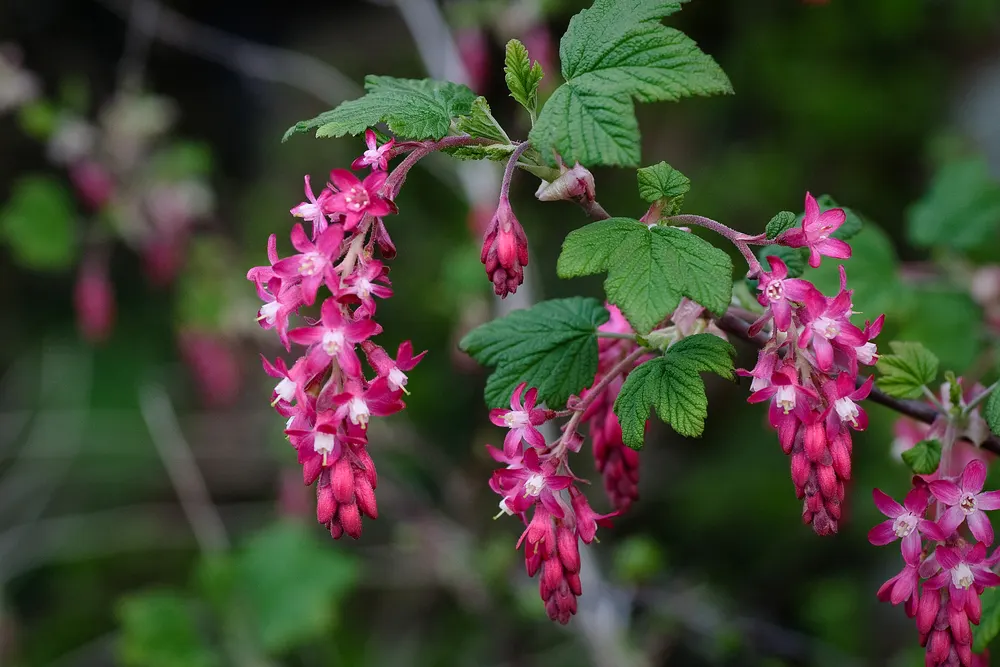
Photo: Mark Robinson from Williton, UK, CC BY 2.0 (via Wikimedia Commons)
Red-Flowering Currant
Ribes sanguineum
Also known as Red flowering currant, Blood currant, Winter currant, Pacific currant
Key benefits
✦Traditional uses
✦Long before it graced cottage gardens, red-flowering currant fed the people of the Pacific Northwest coast. Coast Salish and other Indigenous communities gathered the deep blue-black berries in late summer, eating them fresh off the branch or drying them into cakes to see families through winter, even though the berries were considered less sweet than those of other native currants. The shrub's earliest gift, though, was its timing: it flowers before almost anything else in the forest wakes up, offering the first real nectar of the year to hungry hummingbirds and native bees returning from migration or hibernation. Early settlers and gardeners took notice of that same generosity, and the plant soon found a second life as one of the most beloved ornamental natives of the region.
How to grow & use it
✦The full apothecary for Red-Flowering Currant
Traditional remedies and step-by-step preparations, a complete growing guide, and how to harvest, dry, and store it, all unlocked with HerbLens Unlimited.
- ✦Remedies & preparations
- ✦ Growing guide
- ✦Harvest & storage
From under $6 a month. Free plant identifications always included.
- ✦Elderflower
- ✦Rosehip
- ✦Hawthorn berry
- ✦Black currant (Ribes nigrum)
- ✦Golden currant (Ribes aureum)
“For the first bright welcome of spring, blooming before the leaves return, when hummingbirds come looking for it.”
Scottish botanist David Douglas, of Douglas fir fame, collected seed of Ribes sanguineum on his 1826 expedition and sent it back to England, where the shrub became such a garden sensation that its sale helped fund further plant-hunting voyages into the American West.
Red-flowering currant berries and flowers are safe to eat in ordinary amounts, though the tart, seedy berries can act as a mild laxative if eaten to excess.