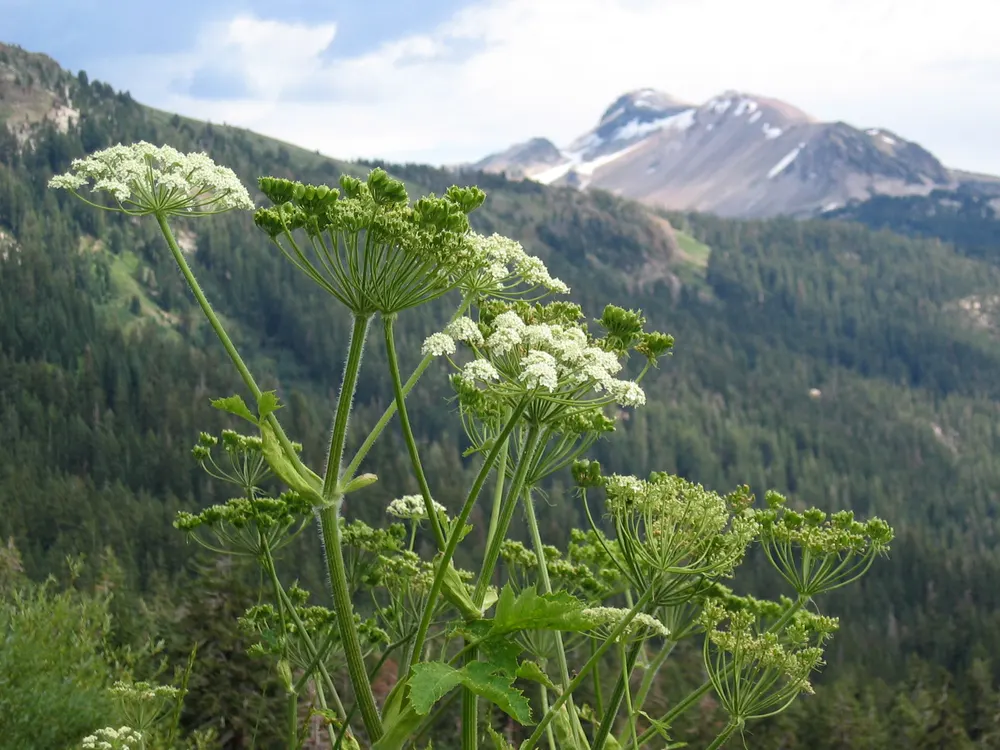
Photo: Dcrjsr, CC BY-SA 3.0 (via Wikimedia Commons)
Cow Parsnip
Heracleum maximum
Also known as Indian Celery, Pushki, Satan Celery, American Cow Parsnip, Heracleum lanatum
Key benefits
✦Traditional uses
✦Cow parsnip has long been known to Indigenous peoples across North America, from coastal tribes of the Pacific Northwest to nations of the interior plains, who called it by names like pushki and treated it as both food and medicine. The tender young stalks, carefully peeled to remove the irritating outer skin, were traditionally eaten raw or cooked in early spring, tasting something like celery. The root was traditionally pounded into a poultice for sore joints, bruises, and aching muscles, and its hollow dried stems were sometimes fashioned into whistles or drinking straws by children. Because it grows tall and showy along waterways, it has always been one of the more recognizable wild umbellifers of the northern woods and meadows.
How to grow & use it
✦The full apothecary for Cow Parsnip
Traditional remedies and step-by-step preparations, a complete growing guide, and how to harvest, dry, and store it, all unlocked with HerbLens Unlimited.
- ✦Remedies & preparations
- ✦ Growing guide
- ✦Harvest & storage
From under $6 a month. Free plant identifications always included.
- ✦Yarrow
- ✦Angelica
- ✦Wild ginger
- ✦Angelica root
“For the towering white umbrella of blooms that lights up stream banks and forest clearings each summer, alive with bees.”
Cow parsnip earned its name because cattle and elk graze on its broad leaves and stems, and foragers noticed elk seeking it out in the same meadows where it grows thickest.
Cow parsnip's sap contains furanocoumarins that react with sunlight on skin, causing severe burning, blistering, and dark scarring known as phytophotodermatitis, so bare skin contact combined with sun exposure should be avoided entirely and any handling should be done with gloves and long sleeves. It is also very easily confused with giant hogweed (Heracleum mantegazzianum), which causes even more severe burns, and with poison hemlock and water hemlock, both of which are deadly if eaten, so positive identification by an expert is essential before any contact and this plant should never be gathered or ingested by anyone without expert foraging knowledge. Because of these serious risks, this entry does not include ingestion instructions. Anyone interested in this plant's traditional uses should consult a qualified herbalist, physician, or professional botanist rather than attempting to harvest or use it based on this description alone.