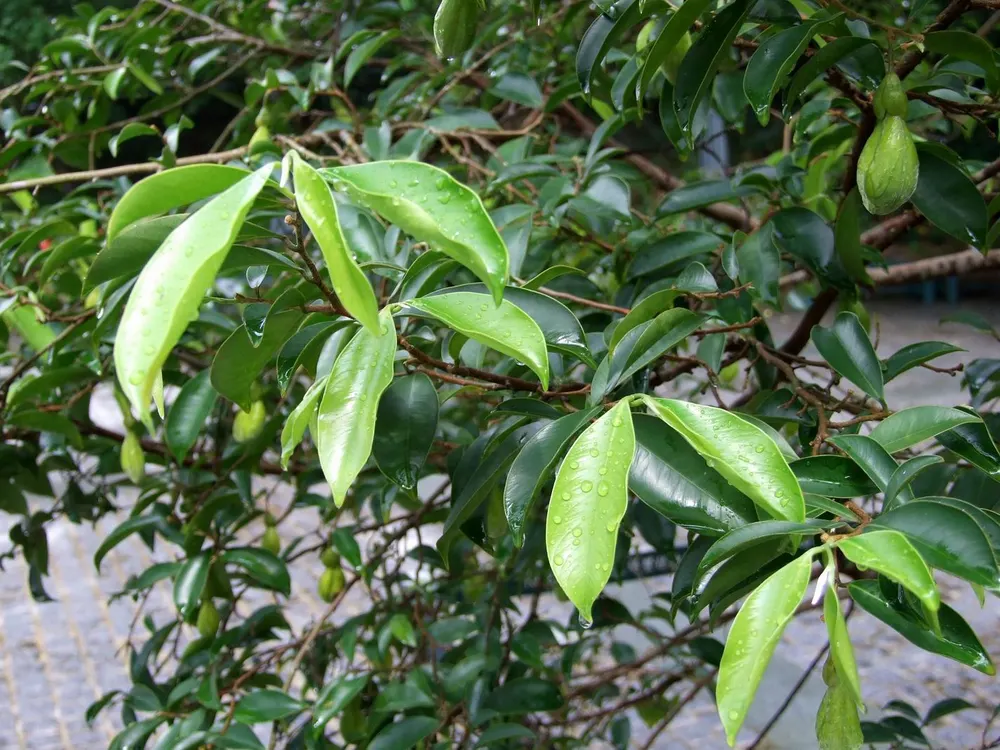
Photo: Chong Fat, CC BY-SA 3.0 (via Wikimedia Commons)
Chinese Eaglewood
Aquilaria sinensis
Also known as Agarwood, Chen Xiang, Aloeswood, Oud Tree, Wood of the Gods
Key benefits
✦Traditional uses
✦For well over a thousand years, healers across China have prized the fragrant heartwood of this quiet forest tree, known as chen xiang, as a warming remedy for a troubled stomach, a tight chest, and a wandering mind. The wood itself is unremarkable until the tree is wounded, at which point it slowly transforms its injury into something extraordinary: a dark, resin-laden heartwood so aromatic it became a treasured incense from Japanese kodo ceremonies to temples across the Middle East and Southeast Asia. In traditional Chinese medicine, small shavings of this resinous wood were folded into formulas meant to guide the body's energy downward, easing nausea, wheezing, and the kind of dull abdominal ache that would not settle. Its scent alone, released as smoke, was traditionally thought to steady an anxious spirit.
How to grow & use it
✦The full apothecary for Chinese Eaglewood
Traditional remedies and step-by-step preparations, a complete growing guide, and how to harvest, dry, and store it, all unlocked with HerbLens Unlimited.
- ✦Remedies & preparations
- ✦ Growing guide
- ✦Harvest & storage
From under $6 a month. Free plant identifications always included.
- ✦Clove
- ✦Sandalwood
- ✦Ginger
- ✦Sandalwood
- ✦Frankincense
“For the tree that turns its own wounds into something the whole room remembers.”
Agarwood only forms after the tree is wounded, infected by a specific mold, or otherwise stressed, and it defends itself by slowly saturating its own wood with a dark, fragrant resin. A tree with no injury produces plain, unscented timber its entire life, which is part of why true agarwood has long ranked among the most expensive natural materials in the world.
Aquilaria sinensis and its resinous heartwood are not known to be toxic in the modest amounts traditionally used, but a few real cautions apply. The tree and most wild Aquilaria species are protected under CITES due to severe overharvesting for the incense and perfume trade, so only purchase agarwood, oud oil, or chen xiang from a sustainably grown or certified source, never wild-poached material. Traditional Chinese medicine reserves this herb for small, carefully measured doses within larger formulas rather than everyday use, and it is generally avoided during pregnancy and by those with weakened digestion without professional guidance, as it is considered a strongly warming, energy-moving herb. Much of the "agarwood" sold commercially is diluted, synthetic, or from unrelated wood, so quality and purity vary widely. As always, speak with a qualified herbalist or healthcare provider before using it medicinally, especially alongside other medications.