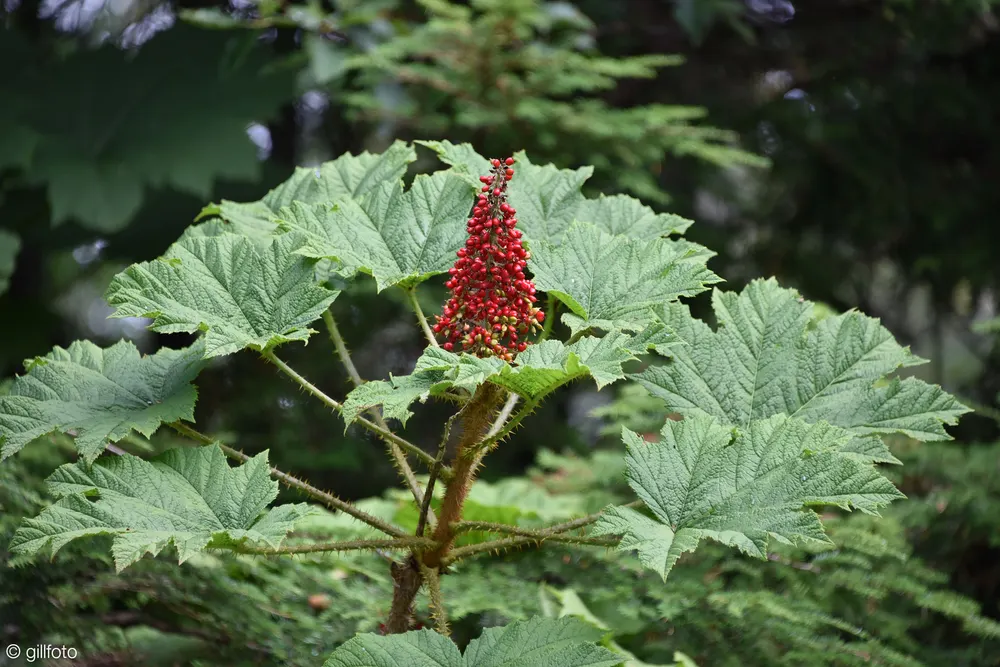
Photo: Gillfoto, CC BY-SA 4.0 (via Wikimedia Commons)
Devil's Club
Oplopanax horridus
Also known as Alaska ginseng, Devil's walking stick (regional name), Oplopanax
Key benefits
✦Traditional uses
✦Among many Northwest Coast and Interior First Nations, from the Tlingit and Haida to the Coast Salish and Nuxalk, devil's club was regarded as one of the most powerful medicines in the forest, sometimes described as help for nearly everything. Its inner bark and root bark were traditionally prepared as teas and washes for arthritis, colds, coughs, and digestive troubles, while the plant itself was carried and burned as protective, purifying medicine in ceremony. Charcoal made from its burned wood was traditionally used as a ceremonial face paint. Because of this deep cultural weight, devil's club is still gathered today with prayer, gratitude, and great restraint.
How to grow & use it
✦The full apothecary for Devil's Club
Traditional remedies and step-by-step preparations, a complete growing guide, and how to harvest, dry, and store it, all unlocked with HerbLens Unlimited.
- ✦Remedies & preparations
- ✦ Growing guide
- ✦Harvest & storage
From under $6 a month. Free plant identifications always included.
- ✦Oregon grape root
- ✦Elderflower
- ✦Yarrow
- ✦Eleuthero (Siberian ginseng)
- ✦American ginseng
“For the deep-forest ache that settles into tired joints, and for the cough that lingers after a long Pacific Northwest winter.”
Devil's club belongs to the same botanical family as true ginseng, which is why it earned the nickname Alaska ginseng, even though the two plants look nothing alike, one a soft-rooted herb and the other a towering, spine-covered shrub that can stop a hiker in their tracks.
Fine spines on the stems and leaves break off under the skin easily and can cause festering wounds, so handle with thick gloves. Bark preparations may lower blood sugar, so use caution with diabetes or blood sugar/blood-thinning medications, and avoid in pregnancy.