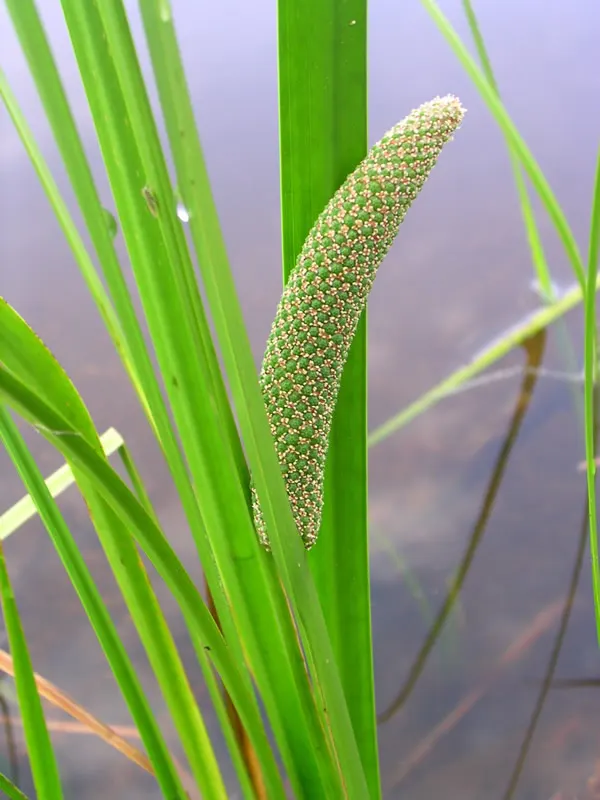
Photo: Jack Greenlee, U.S. Forest Service, Public domain (via Wikimedia Commons)
American Sweet Flag
Acorus americanus
Also known as Sweetflag, Rat Root, Muskrat Root, Myrtle Flag, Sweet Root
Key benefits
✦Traditional uses
✦Long before it had a Latin name, this marsh-loving iris relative was known to the Cree, Ojibwe, Blackfoot, and many other nations as rat root, a small chewed piece of rhizome said to steady the traveler against cold, fatigue, and hunger on long journeys or portages. It moved along extensive trade routes far beyond its wetland range, carried and exchanged as something worth having, a sign of how highly its warming, spicy root was regarded. Bundles of the leaves and root were also kept for ceremony and for the sweet, ginger-like fragrance that clings to the hands after handling it. Its more recent history includes caution as well as reverence, since twentieth century research into its aromatic compounds led food regulators to draw firm lines around how the plant, and its close relatives, should and should not be used.
How to grow & use it
✦The full apothecary for American Sweet Flag
Traditional remedies and step-by-step preparations, a complete growing guide, and how to harvest, dry, and store it, all unlocked with HerbLens Unlimited.
- ✦Remedies & preparations
- ✦ Growing guide
- ✦Harvest & storage
From under $6 a month. Free plant identifications always included.
- ✦Blue flag iris (as a wetland garden companion, not for use together internally)
- ✦Cattail
- ✦Sweetgrass
- ✦Dwarf sweet flag (Acorus gramineus), a smaller ornamental relative grown for foliage rather than root use
“For the quiet wetland walker who stops at the marsh edge to trace a sweet, spicy scent on the air long before spotting the plant it comes from.”
Some Cree communities called it weekenh, or rat root, because muskrats were observed digging up and gnawing on the rhizomes, and travelers took this as a sign of where to find it along the water's edge.
The FDA prohibits internal use of calamus root because of documented toxicity and carcinogenicity in animal studies, and in larger amounts it has historically caused nausea, vomiting, and hallucinogenic effects, plus possible interactions with sedative or psychoactive medications; it is not safe in pregnancy or for children. It also grows alongside genuinely toxic look-alikes like blue flag iris and is easily confused with its even more potent relative, Acorus calamus, so it should not be gathered or used as food or medicine.