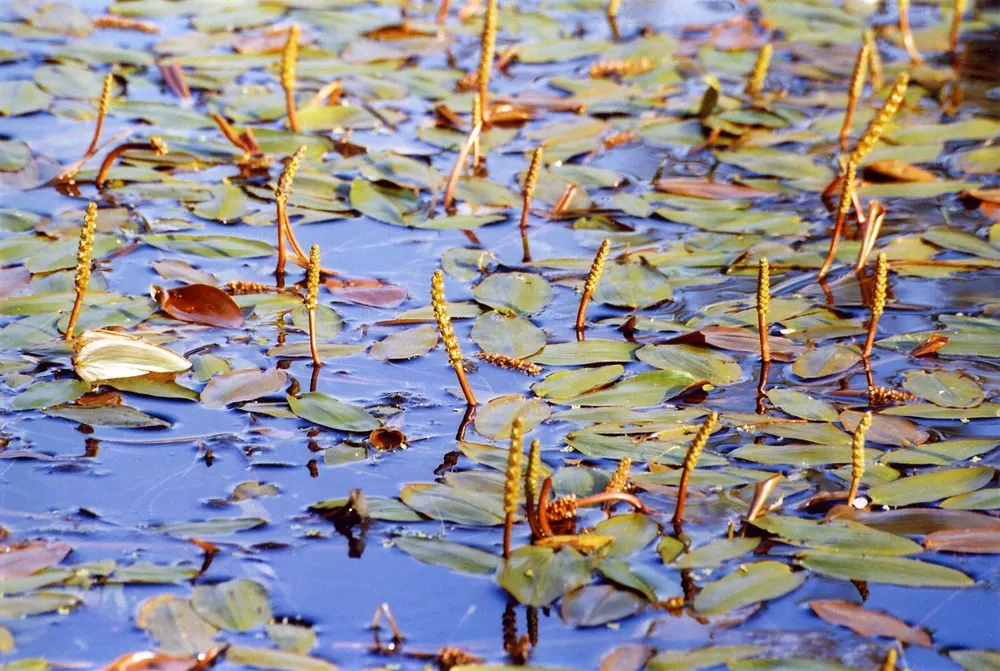
Photo: Christian Fischer, CC BY-SA 3.0 (via Wikimedia Commons)
Broad-leaved Pondweed
Potamogeton natans
Also known as Floating Pondweed, Broadleaf Pondweed
Key benefits
✦Traditional uses
✦Broad-leaved pondweed has never held a real place in the apothecary cabinet, but it has quietly earned its keep in the pond and the wetland for as long as people have kept water gardens and fished still ponds. Anglers have long read its floating leaves as a sign of good cover, knowing pike and perch tuck beneath the mats to wait and hide. Waterfowl keepers and naturalists have prized it too, since ducks and coots eat the seeds and tender shoots through autumn and winter. It is a plant valued for the life it gathers around it rather than for anything taken from it.
How to grow & use it
✦The full apothecary for Broad-leaved Pondweed
Traditional remedies and step-by-step preparations, a complete growing guide, and how to harvest, dry, and store it, all unlocked with HerbLens Unlimited.
- ✦Remedies & preparations
- ✦ Growing guide
- ✦Harvest & storage
From under $6 a month. Free plant identifications always included.
- ✦Water Lily
- ✦Hornwort
- ✦Water Mint
- ✦Curled Pondweed
- ✦Water Crowfoot
“For the pond that wants a little more hush, a little more shelter, and a few more dragonflies.”
The genus name Potamogeton comes from the Greek potamos, meaning river, and geiton, meaning neighbor, so the plant's name literally means neighbor of the river. Its floating leaves also have a small flexible joint where the leaf stalk meets the blade, letting each leaf pivot and lie flat no matter how the water moves beneath it.
This pond plant is not known to be toxic but has no history of medicinal use and should not be eaten. Wild aquatic plants can carry bacteria or runoff contamination, so source water garden plants from a nursery instead.