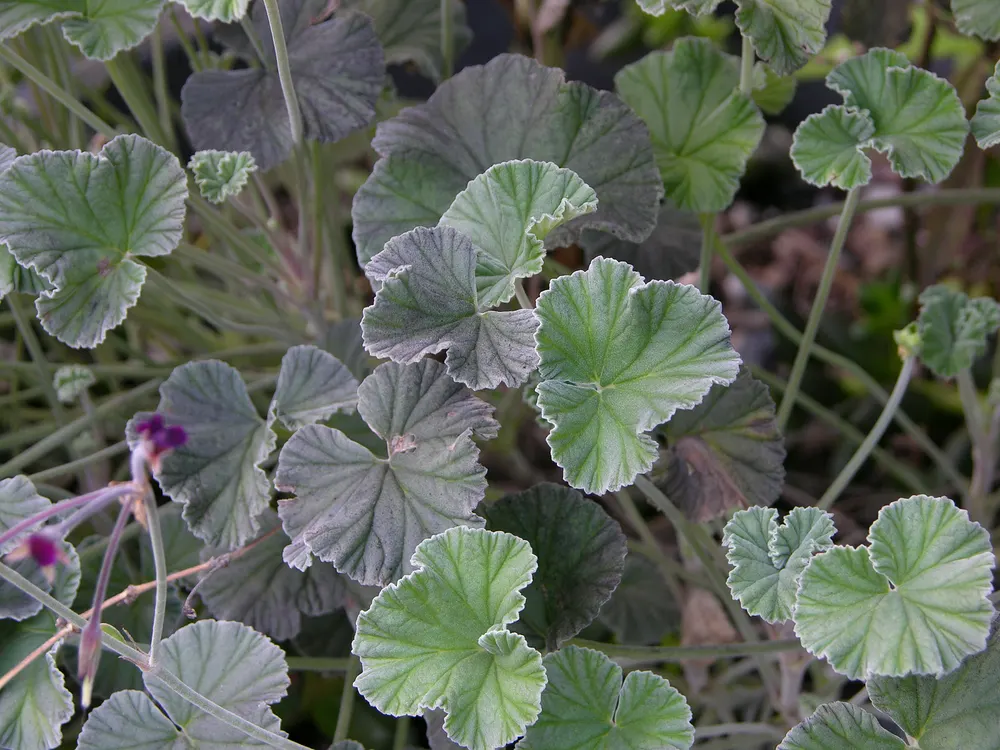
Photo: Photo by and (c)2006 Derek Ramsey (Ram-Man). Location credit to the Chanticleer Garden., CC BY-SA 3.0 (via Wikimedia Commons)
African Geranium
Pelargonium sidoides
Also known as Umckaloabo, Kalwerbossie, South African Geranium, Rabas Root
Key benefits
✦Traditional uses
✦Long before it appeared in any pharmacy, this humble geranium was dug from the red soil of the Basotho highlands, where healers used its dark, aromatic taproot to ease coughs, sore throats, and chest complaints. Zulu and Basotho herbal traditions relied on decoctions of the root for ailments of the lungs and gut alike. Its modern fame traces to a story passed down for over a century, an Englishman named Charles Henry Stevens, gravely ill with what was called consumption, was said to have been treated by a Basotho healer with this very root and returned home recovered. He carried the remedy back to Europe, where it became known as Umckaloabo, a word borrowed from the Zulu for a cough that settles deep in the chest.
Growing guide
✦Fresh to dried
✦Traditional preparations
✦African Geranium Root Decoction
A gentle, warming preparation traditionally used to soothe a nagging cough or scratchy throat during the cold season.
How it's made. Traditionally, 1 teaspoon of chopped dried root is simmered gently in 1 cup of water for about 15 minutes, then strained and sipped warm, up to twice daily for a few days.
Honey Root Syrup
A simple folk remedy that pairs the earthy root decoction with honey to make it easier on a sore throat.
How it's made. Traditionally, a strong decoction is strained and stirred with a spoonful of raw honey while still warm, then taken by the spoonful as needed.
- ✦Thyme
- ✦Elderberry
- ✦Licorice Root
- ✦Echinacea
- ✦Marshmallow Root
“For the season when every throat in the house sounds a little rougher than it should.”
The name Umckaloabo comes from the Zulu phrase for a cough that sits heavy in the chest, and the remedy's journey from a Basotho healer's hut to European pharmacy shelves is one of the more remarkable travel stories in herbal history.
This root may enhance the effect of blood-thinning medication and should be avoided by anyone on anticoagulants. Rare cases of liver irritation have been reported with concentrated extracts, so it isn't recommended for those with liver disease, and it's best avoided in pregnancy.