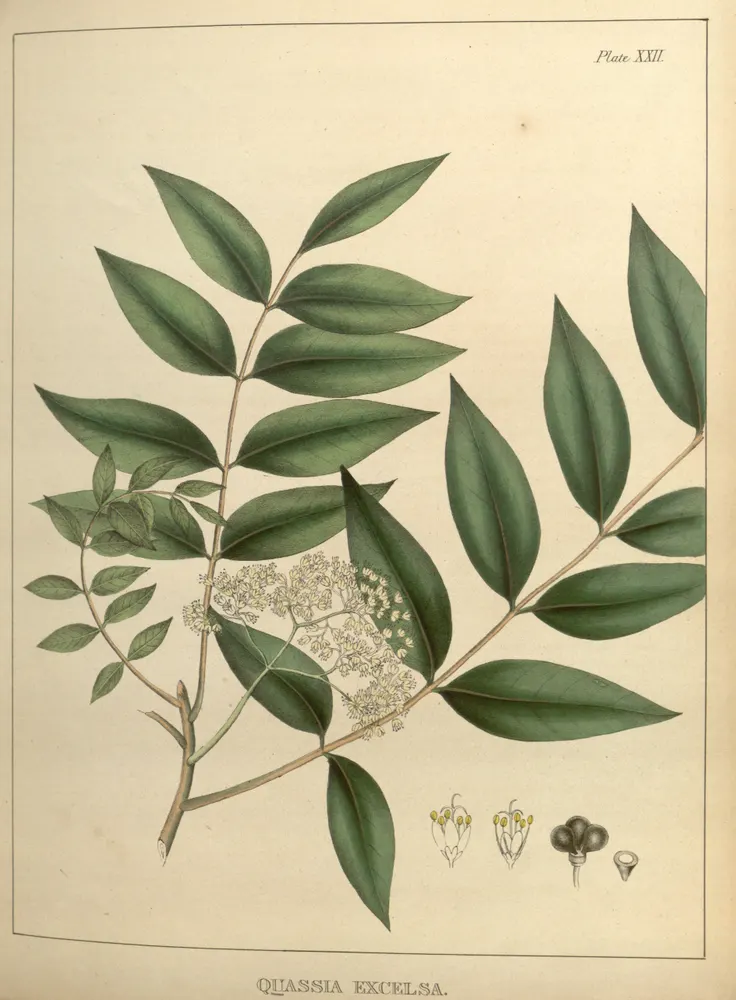
Photo: Carson, Joseph; Colen, J. H.; Robert P. Smith., Public domain (via Wikimedia Commons)
Quassia (Jamaican Quassia, Bitterwood)
Picrasma excelsa
Also known as Jamaican Quassia, Bitterwood, Bitter Ash, Quassia Wood
Key benefits
✦Traditional uses
✦Quassia wood has long been prized across the Caribbean and in European herbal tradition as one of the most intensely bitter substances found in nature, and a simple infusion of the shaved heartwood was used to stimulate digestion and coax back a flagging appetite. Colonial-era physicians and sailors carried quassia chips for stomach complaints on long voyages, and the wood became a foundational ingredient in bitters, tonic wines, and even some historic bitter beers throughout the 18th and 19th centuries. In Jamaican folk practice, shavings of the wood were also scattered in homes and gardens, valued as a traditional insect deterrent long before synthetic pesticides existed. It carries the island name in its common title as a nod to where it grew most famously.
How to grow & use it
✦The full apothecary for Quassia (Jamaican Quassia, Bitterwood)
Traditional remedies and step-by-step preparations, a complete growing guide, and how to harvest, dry, and store it, all unlocked with HerbLens Unlimited.
- ✦Remedies & preparations
- ✦ Growing guide
- ✦Harvest & storage
From under $6 a month. Free plant identifications always included.
- ✦Gentian root
- ✦Fresh ginger
- ✦Dried orange peel
- ✦Gentian root
- ✦Wormwood
“When the appetite has gone quiet and digestion needs a bitter nudge to wake back up.”
Quassia wood is so intensely bitter that its compound quassin can be detected by taste at a dilution of roughly one part in sixty thousand, making it one of the bitterest natural substances known, and it once lent its distinctive edge to classic tonic bitters and even certain old-world bitter beers.
Quassia should be used only in small, traditional bitter-tonic amounts, since larger doses can cause nausea, vomiting, and gastrointestinal irritation. It's traditionally avoided during pregnancy and breastfeeding and isn't appropriate for anyone with peptic ulcers or active inflammatory bowel disease. It may also affect blood sugar and digestion, so use caution if you have diabetes or take prescription medications.