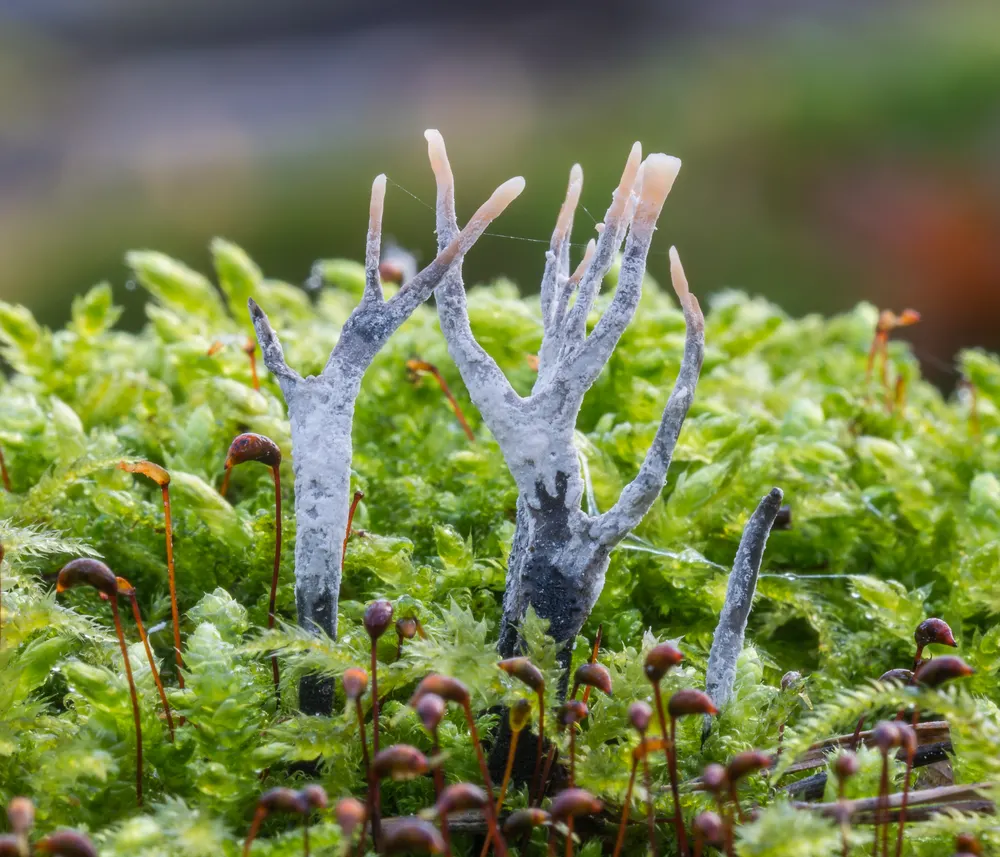
Photo: Norbert Nagel, CC BY-SA 3.0 (via Wikimedia Commons)
Candlesnuff Fungus
Xylaria hypoxylon
Also known as Candlesnuff Fungus, Carbon Antlers, Stag's Horn Fungus, Snuffout Fungus
Key benefits
✦Traditional uses
✦Xylaria hypoxylon has no real place in the herbalist's cabinet. It is a wood-decay fungus, not a medicinal plant, and its true value has always been ecological rather than remedial: it is one of the quiet workhorses that breaks fallen branches and old stumps back down into soil. Foragers and naturalists have long prized it as a teaching mushroom, a small, unmistakable marker of a woodland floor that is doing its slow, patient work of renewal. Old natural history writers were charmed by its odd shape and sooty coloring long before mycology had a name for what it actually does.
How to grow & use it
✦The full apothecary for Candlesnuff Fungus
Traditional remedies and step-by-step preparations, a complete growing guide, and how to harvest, dry, and store it, all unlocked with HerbLens Unlimited.
- ✦Remedies & preparations
- ✦ Growing guide
- ✦Harvest & storage
From under $6 a month. Free plant identifications always included.
- ✦Turkey tail
- ✦Witch's butter
- ✦Jelly ear
- ✦Xylaria polymorpha (dead man's fingers), a close relative often mistaken for it
“For the quiet thrill of spotting pale, antler-like fingers rising from a rotting log on a cold woodland walk.”
Its odd common name comes straight from its looks: young fruiting bodies are covered in a fine white dust of asexual spores, while the base blackens and hardens with age, so the whole thing looks exactly like a candle wick that has just been pinched out, still trailing a wisp of smoke.
Candlesnuff fungus isn't eaten or used medicinally: it's tough, woody, and unpalatable. As with any wild fungus, don't rely on looks alone, since toxic lookalikes exist in the woods.