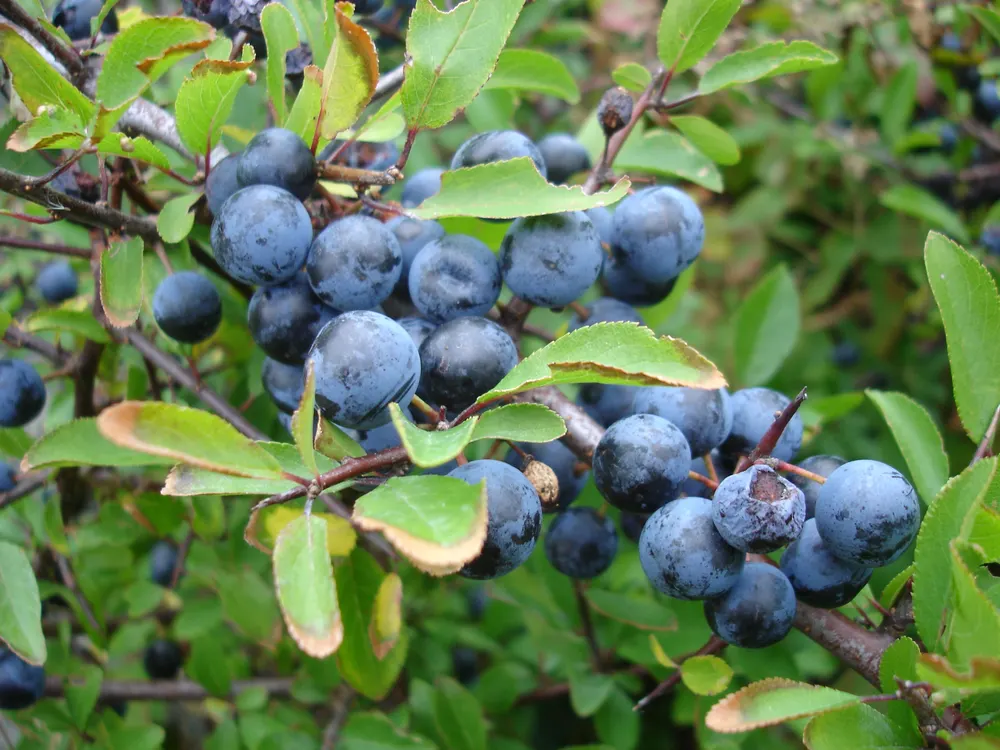
Photo: CC BY-SA 3.0 (via Wikimedia Commons)
Blackthorn
Prunus spinosa
Also known as Sloe, Blackthorn Plum, Sloe Bush, Wild Plum
Key benefits
✦Traditional uses
✦Blackthorn has walked alongside people in the hedgerows of Europe for thousands of years, so long that dried sloes were even found among the provisions carried by Otzi the Iceman. Village herbalists gathered the early spring blossoms for gentle tonics meant to ease sluggish digestion and support the kidneys, while the astringent bark and unripe fruit were brewed into washes and gargles for sore, irritated tissue. The fruit itself, sharply sour until frost softens it, became the backbone of country kitchens, turned into preserves, syrups, and the beloved sloe gin that warms many a winter cupboard. It was as much a plant of practical household medicine as it was a forager's autumn reward.
How to grow & use it
✦The full apothecary for Blackthorn
Traditional remedies and step-by-step preparations, a complete growing guide, and how to harvest, dry, and store it, all unlocked with HerbLens Unlimited.
- ✦Remedies & preparations
- ✦ Growing guide
- ✦Harvest & storage
From under $6 a month. Free plant identifications always included.
- ✦Hawthorn
- ✦Rosehip
- ✦Elderflower
- ✦Hawthorn berry
- ✦Wild plum
“For the hedgerow's tart, honest gift, a plant of white spring blossom and dark autumn fruit, steeped into gentle tonics and old country cordials.”
The name blackthorn comes from its dark, almost black bark, which stands out starkly against the pure white blossoms that cover the branches before a single leaf appears each spring.
Only the fully ripe, softened sloes are eaten, and even then usually after a frost, since unripe fruit is intensely tart. Like other Prunus fruits, the seed kernels, leaves, and bark contain cyanogenic compounds and should never be eaten. The thorns are sharp and can cause scratches prone to infection, so wear gloves when foraging or pruning.