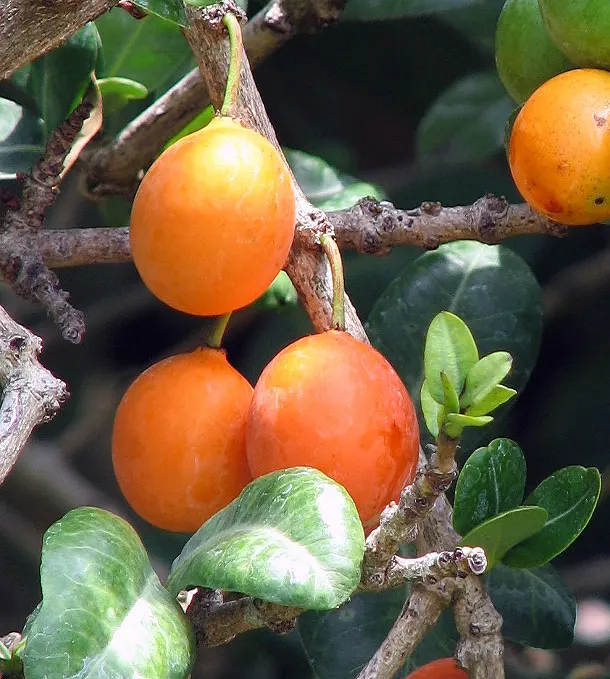
Photo: Christopher Hind, Attribution (via Wikimedia Commons)
African Mangosteen
Garcinia livingstonei
Also known as Livingstone's Garcinia, Imbe, Lowveld Mangosteen, Wild Plum (regional)
Key benefits
✦Traditional uses
✦Long before it had a Latin name, the African mangosteen was a familiar friend along riverbanks and cattle paths from Tanzania down through Mozambique and into South Africa's Lowveld, its orange fruit gathered by hand and eaten straight from the branch. Communities across its range have traditionally turned the tart, plum-sized fruit into juice, jam, and a mildly fermented wine, prizing it as one of the sweetest wild bites of the dry season. Beyond the table, the bark has traditionally been used in local folk medicine for digestive complaints, though this practice is far less documented than the fruit's culinary standing. The tree also carries the name of the Scottish explorer David Livingstone, who encountered and recorded it during his nineteenth century travels through the African interior.
Growing guide
✦Fresh to dried
✦Traditional preparations
✦Fresh Fruit and Juice
The simplest and most time-honored way to enjoy African mangosteen, eaten fresh or pressed into a tart, vitamin-rich juice, much as it has been gathered from riverside trees for generations.
How it's made. Peel and eat 2 to 3 ripe fruits fresh, or blend the pulp of a small handful with a little water and strain to make a refreshing juice.
- ✦Baobab
- ✦Hibiscus
- ✦Ginger
- ✦Mangosteen (Garcinia mangostana)
- ✦Tamarind
“For the bright, sun-warmed tang of Africa's riverside bush, gathered rather than grown.”
The tree takes its species name from the explorer David Livingstone, who documented it while traveling through the Zambezi region, and its fruit was already a well-loved wayside snack for local communities long before that.
Ripe African mangosteen fruit is safe to eat; the unripe fruit and skin sap are bitter and can be mildly irritating.