Photo: Eric Hunt, CC BY-SA 4.0 (via Wikimedia Commons)
Mayapple
Podophyllum peltatum
Also known as American Mandrake, Wild Mandrake, Umbrella Leaf, Hog Apple, Indian Apple
Key benefits
✦Traditional uses
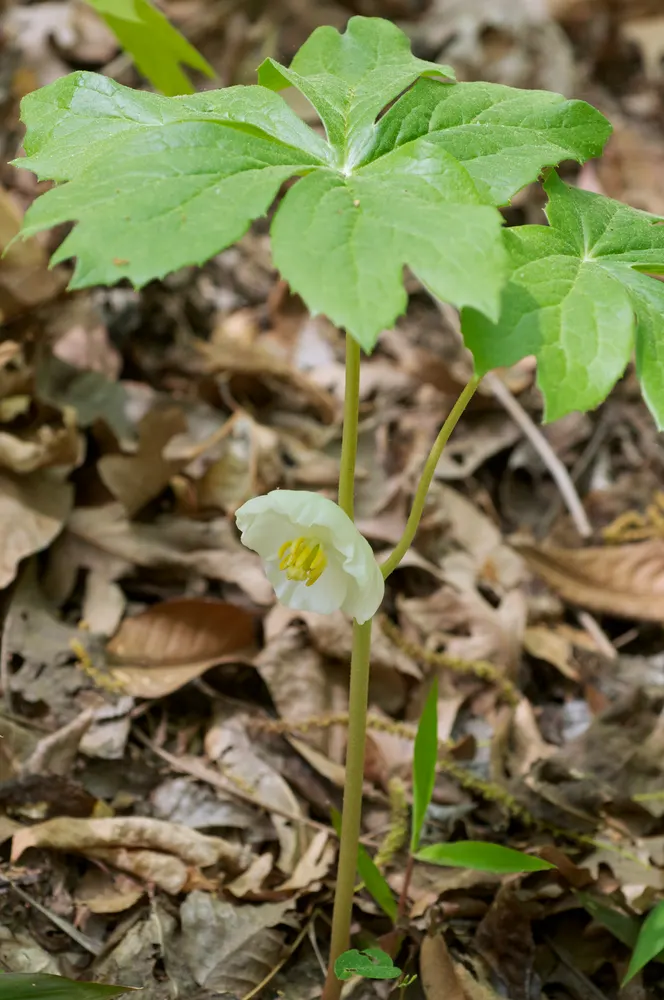
✦Mayapple was one of the more feared and respected plants in the toolkit of several Native American nations, including the Cherokee, Iroquois, and Penobscot, who understood its root as a powerful purgative to be used sparingly and with great caution. Early American physicians took note, and by the nineteenth century a resin extracted from the root, called podophyllin, had entered conventional medicine as a treatment for skin growths and warts, a legacy that echoes faintly in prescription wart treatments still used today. Despite its danger, the plant itself became a cherished sight of the spring woods, its twin umbrella-like leaves unfurling over the forest floor each April like a small green parasol before the single hidden flower opens beneath them. It is a plant admired far more often than it has ever been safely used.
How to grow & use it
✦The full apothecary for Mayapple
Traditional remedies and step-by-step preparations, a complete growing guide, and how to harvest, dry, and store it, all unlocked with HerbLens Unlimited.
- ✦Remedies & preparations
- ✦ Growing guide
- ✦Harvest & storage
From under $6 a month. Free plant identifications always included.
- ✦Black cohosh
- ✦Bloodroot
- ✦Wild ginger
- ✦Dandelion root
- ✦Yellow dock
“For the hushed, shaded woodland floor in earliest spring, where a single white bloom hides beneath twin umbrella leaves, admired from a respectful distance.”
The eastern box turtle is one of the only creatures able to eat mayapple's ripe golden fruit and pass its seeds unharmed, which is how the plant has spread through so many quiet corners of the eastern forest for centuries.
Every part of mayapple except the fully ripened fruit contains podophyllotoxin, a potent toxin concentrated most heavily in the root. Eating the root, leaves, stems, seeds, or green fruit can cause severe vomiting, diarrhea, and in significant amounts has proven fatal, and even the ripe fruit is safe only in very small quantity, as the seeds within it remain toxic. Historically, some Native American nations used the root as a harsh purgative and, according to ethnobotanical records, as an abortifacient and even as a means of suicide, grim testimony to how strong its effects are. The resin, once refined into podophyllin, is caustic enough to blister skin and was used only under close medical supervision as a prescription treatment for genital warts, never as a home remedy. Pregnant women, nursing mothers, children, and pets should avoid all contact with this plant, and no part of it should ever be self-administered. This entry is for identification and garden interest only. Please talk to a qualified healthcare professional or medical toxicologist before considering any use, and contact poison control immediately if ingestion is suspected.