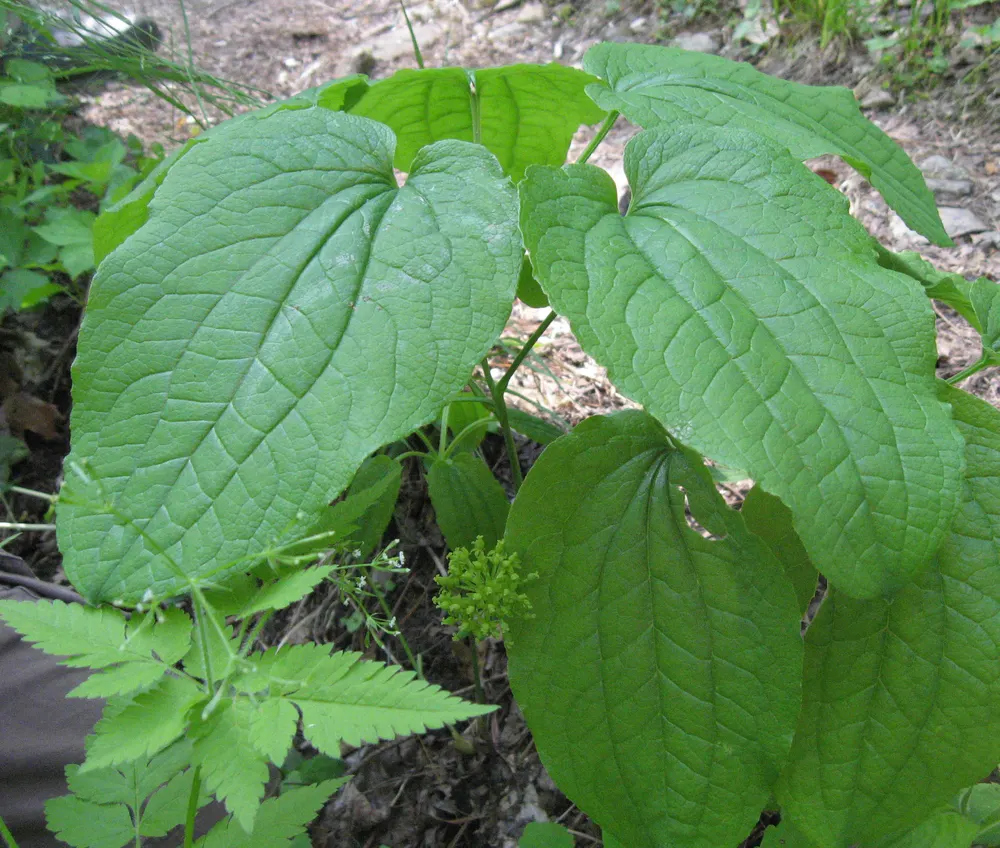
Photo: Mason Brock (Masebrock), Public domain (via Wikimedia Commons)
Upright Carrionflower
Smilax ecirrhata
Also known as Carrion Flower, Erect Carrionflower, Tendril-less Smilax
Key benefits
✦Traditional uses
✦Long before it had a Latin name, this quiet woodland plant was known to foragers simply as a spring green, its young shoots snapped off and eaten much like asparagus by generations who walked the same forest edges every April. Its roots, resembling those of true sarsaparilla, were dug and simmered by some Native American communities and early settlers as a general tonic, valued the way other Smilax roots were valued across the continent, as a gentle, cleansing addition to the herbal pantry. The plant earned its common name honestly: its clustered flowers give off a faint carrion-like scent to lure the flies that pollinate them, a small act of woodland trickery that has fascinated naturalists for generations. Unlike its tendril-climbing cousins, Smilax ecirrhata stands upright on its own, a trait tucked right into its species name, ecirrhata, meaning without tendrils.
How to grow & use it
✦The full apothecary for Upright Carrionflower
Traditional remedies and step-by-step preparations, a complete growing guide, and how to harvest, dry, and store it, all unlocked with HerbLens Unlimited.
- ✦Remedies & preparations
- ✦ Growing guide
- ✦Harvest & storage
From under $6 a month. Free plant identifications always included.
- ✦Sarsaparilla
- ✦Burdock root
- ✦Yellow dock
- ✦Sarsaparilla
- ✦Burdock root
“For the fleeting green taste of a woodland spring, gathered quietly at the forest's edge.”
Its flower clusters give off a faint whiff of decay, not to repel visitors but to invite them: the scent draws in carrion flies, which do the plant's pollinating work in exchange for a meal that never actually exists.
Wild Smilax shoots and roots should only be gathered with confident identification, since young woodland growth can be mistaken for other plants. Medicinal use of the root is not well studied, so pregnant or nursing individuals, children, and anyone on medication should avoid it.