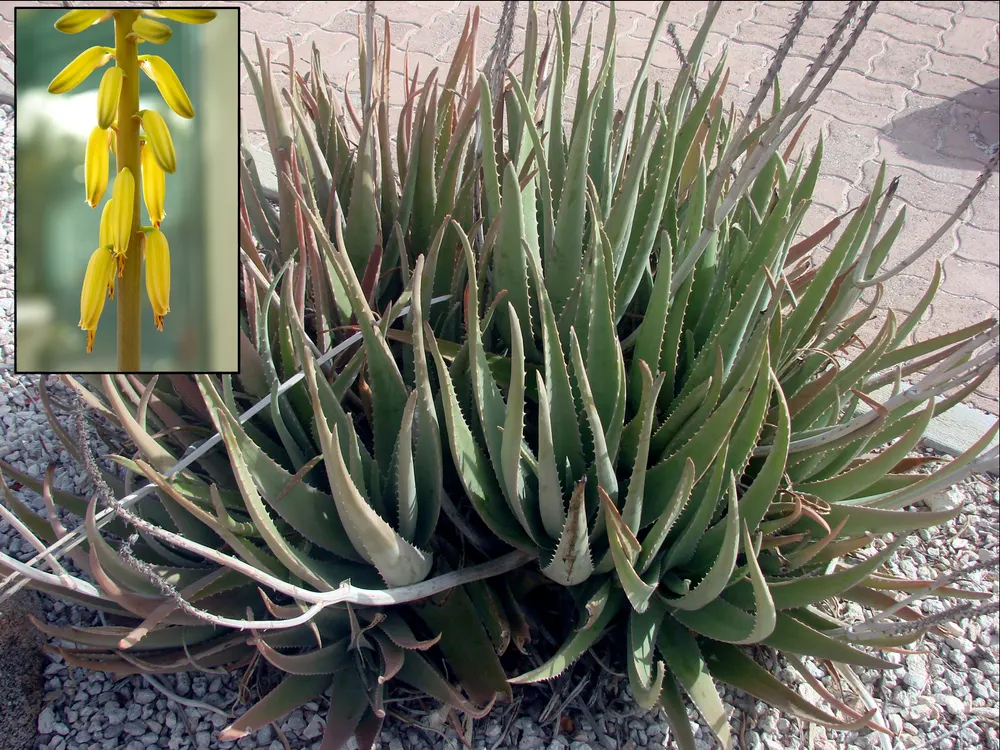
Photo: Collage by en:User:MidgleyDJ, original images from Wikimedia commons (Image:Aloe_vera_offsets.jpg and Image:Aloe_vera_C.jpg), CC BY-SA 3.0 (via Wikimedia Commons)
Aloe Vera
Aloe vera
Also known as True Aloe, Barbados Aloe, Medicinal Aloe, Plant of Immortality
Key benefits
✦Traditional uses
✦Aloe vera has been treasured for thousands of years, its thick leaves broken open for the cool, clear gel inside. Egyptian healers called it the plant of immortality and it appears in the Ebers Papyrus, a medical text dating back over 3,500 years, while legend holds that Cleopatra and Nefertiti both used it in their beauty regimens. Greek physicians including Dioscorides praised it for wounds and skin complaints, and it holds a similarly deep place in Ayurvedic and traditional Chinese medicine, where it was valued for cooling and soothing the body. Across cultures and centuries, aloe earned its reputation the same way, as the plant reached for first when skin needed comfort.
Growing guide
✦Fresh to dried
✦Traditional preparations
✦Fresh Aloe Gel for Skin
The classic, time-honored use of aloe, applied straight from the leaf to soothe sun-warmed or minor irritated skin.
How it's made. Slice a fresh leaf lengthwise and scoop out about a tablespoon of the clear inner gel. Rub it gently over the affected area of skin and let it air dry. Traditionally reapplied two to three times a day as needed.
Diluted Aloe Juice Tonic
A mild traditional preparation used occasionally to support digestive comfort, made from the inner gel rather than the outer leaf rind or latex layer.
How it's made. Blend 1 to 2 tablespoons of fresh, rind-free inner gel with a full glass of water or juice. Traditionally taken no more than once daily, and not for extended stretches of time.
- ✦Calendula
- ✦Lavender
- ✦Chamomile
- ✦Calendula
- ✦Slippery Elm
“When your skin needs a cool, green kind of comfort.”
Legend holds that Alexander the Great was advised by Aristotle to capture the island of Socotra specifically for its abundant aloe fields, so his army would have a ready supply to treat wounded soldiers.
Aloe latex, the bitter yellow sap beneath the leaf's rind, is a strong laxative and should not be used regularly or in large amounts; stick to gel free of rind and latex. Avoid internal use during pregnancy and breastfeeding, and use caution if you take diabetes or diuretic medication, since aloe can amplify their effects. Topical gel suits most people but should not go on deep or infected wounds.