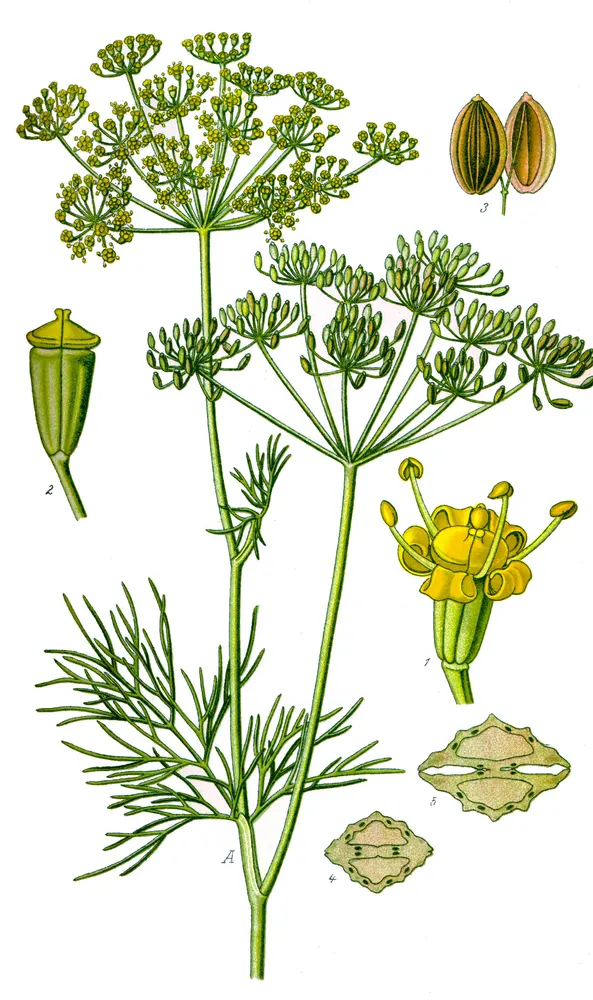
Photo: Illustration_Anethum_graveolens0.jpg: Prof. Dr. Otto Wilhelm Thomé derivative work: Aroche (talk), Public domain (via Wikimedia Commons)
Dill
Anethum graveolens
Also known as Dill weed, Garden dill, Dilly, Aneth
Key benefits
✦Traditional uses
✦Dill has been valued as a digestive comfort herb for thousands of years, with traces of it found in Egyptian tombs and mentions in ancient Greek medical writings. Its very name is thought to come from the Old Norse word 'dilla,' meaning to lull or soothe, a nod to its long folk reputation for settling a fussy stomach after a heavy meal. Cooks and healers alike have long reached for both the feathery leaf and the seed, the leaf prized for its bright, grassy flavor and the seed for its stronger, more warming digestive character. In many old households a cup of dill seed tea was simply what you made when supper sat too heavy.
How to grow & use it
✦The full apothecary for Dill
Traditional remedies and step-by-step preparations, a complete growing guide, and how to harvest, dry, and store it, all unlocked with HerbLens Unlimited.
- ✦Remedies & preparations
- ✦ Growing guide
- ✦Harvest & storage
From under $6 a month. Free plant identifications always included.
- ✦Fennel
- ✦Chamomile
- ✦Caraway
- ✦Fennel seed
- ✦Caraway seed
“When the day feels heavy in your stomach and you want something bright, grassy, and gently settling.”
The name 'dill' likely comes from the Old Norse word 'dilla,' meaning 'to lull or soothe,' a reflection of its centuries-old reputation as the herb families reached for when a baby or a stomach needed calming.
Dill is safe in normal cooking amounts. Medicinal doses of the seed may interact with blood thinners or diabetes medication, and since dill belongs to the carrot family, which includes toxic look-alikes like poison hemlock, never forage it in the wild without certain identification.