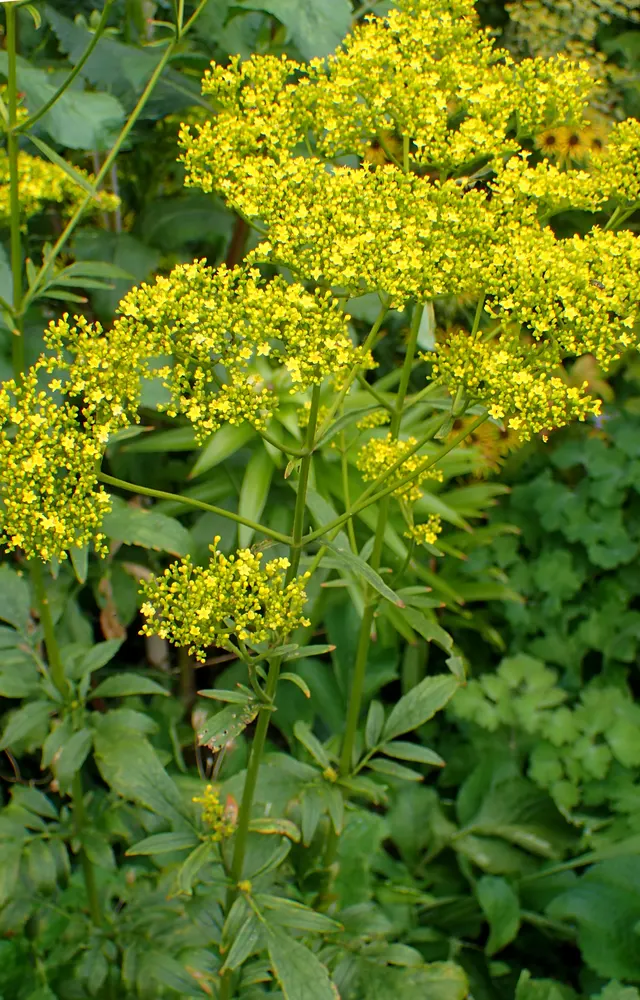
Photo: Krzysztof Ziarnek, Kenraiz, CC BY-SA 4.0 (via Wikimedia Commons)
Golden Lace
Patrinia scabiosifolia
Also known as Ominaeshi, Bai Jiang Cao, Golden Valerian, Scabious-leaved Patrinia, Maiden Flower
Key benefits
✦Traditional uses
✦In traditional Chinese medicine, Bai Jiang Cao, meaning roughly 'rotten sauce herb' for the pungent, fermented smell of the fresh plant, has long been valued as a heat-clearing, toxin-resolving herb, traditionally used to support the body during digestive upset and to encourage healthy circulation, especially in the period after childbirth. It was often reached for alongside other cooling herbs when the belly felt hot, tender, or unsettled. In Japan, the same golden-flowered plant carries a gentler legacy, celebrated for centuries as ominaeshi, the maiden flower, for its beauty rather than its bite. Herbalists across East Asia have treasured it as both a medicine cabinet staple and a garden ornament for well over a thousand years.
How to grow & use it
✦The full apothecary for Golden Lace
Traditional remedies and step-by-step preparations, a complete growing guide, and how to harvest, dry, and store it, all unlocked with HerbLens Unlimited.
- ✦Remedies & preparations
- ✦ Growing guide
- ✦Harvest & storage
From under $6 a month. Free plant identifications always included.
- ✦Houttuynia (fish mint)
- ✦Coix seed (Job's tears)
- ✦Honeysuckle flower
- ✦Patrinia villosa (a closely related species used interchangeably)
- ✦Houttuynia cordata
“For the golden hush of late summer, when meadows go soft and lacy and the year begins its slow turn toward autumn.”
In Japan, ominaeshi is one of the seven classical Flowers of Autumn, a tradition of appreciating wild blooms that dates back to the eighth-century Manyoshu poetry collection, where its sprays of tiny golden flowers were likened to the trailing sleeves of a graceful young woman.
Patrinia scabiosifolia is generally regarded in traditional practice as a well-tolerated herb rather than a toxic one, but it has traditionally been avoided during pregnancy because of its long association with moving stagnation and supporting the postpartum period, a use pattern traditional systems link with stimulating effects on the womb. Some people notice mild stomach upset at higher amounts, and the fresh plant has a strong, sauce-like odor that some find unpleasant. Modern clinical research on the plant is limited, and its interactions with medications have not been well studied. Anyone who is pregnant, nursing, managing a health condition, or taking medication should talk to a qualified healthcare provider before using this or any other herb.