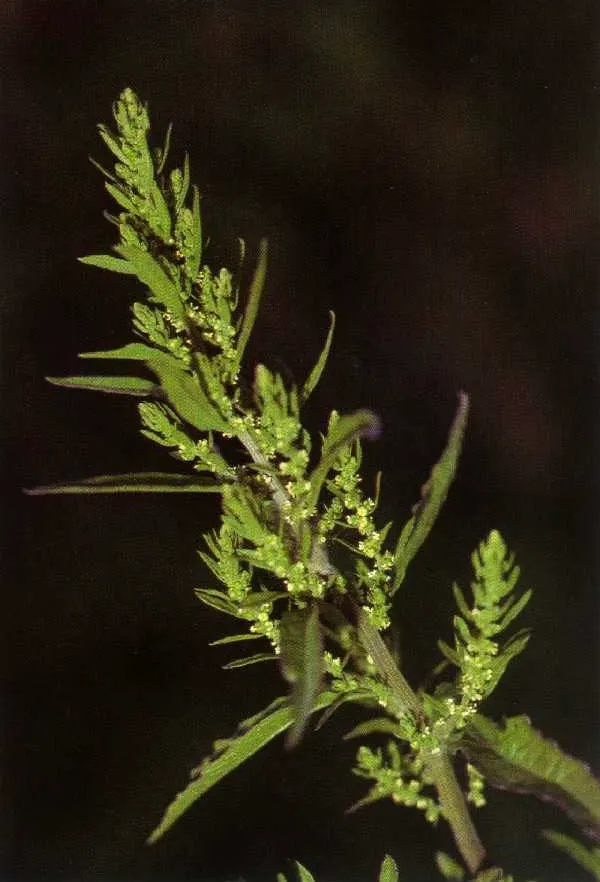
Photo: Robert H. Mohlenbrock, Public domain (via Wikimedia Commons)
Epazote
Dysphania ambrosioides
Also known as Wormseed, Mexican Tea, Jesuit's Tea, Paico, Skunk Weed
Key benefits
✦Traditional uses
✦Long before it scented kitchens across Mexico and Central America, epazote grew as a humble dooryard weed that Aztec and Maya households gathered for both the cook pot and the medicine chest. Its most beloved role has always been alongside black beans, where a single sprig cut through the meal's heaviness and was said to ease the gas that beans are famous for. Healers across Mesoamerica also turned to the leaf as a folk remedy for stomach complaints and, later, distilled its potent oil into a widely sold over-the-counter dewormer in the early twentieth century, a use since abandoned once its real dangers came to light. Today epazote survives mainly as a beloved culinary herb, its old medicinal reputation remembered but treated with far more caution.
How to grow & use it
✦The full apothecary for Epazote
Traditional remedies and step-by-step preparations, a complete growing guide, and how to harvest, dry, and store it, all unlocked with HerbLens Unlimited.
- ✦Remedies & preparations
- ✦ Growing guide
- ✦Harvest & storage
From under $6 a month. Free plant identifications always included.
- ✦Black beans
- ✦Corn and masa dishes
- ✦Chile peppers
- ✦Fresh cilantro combined with a pinch of Mexican oregano
“When a pot of simmering black beans needs that one unmistakable, earthy leaf that only epazote can give it.”
Epazote's unmistakable, almost medicinal aroma comes largely from a compound called ascaridole, the very same compound that made its distilled oil, sold for decades as 'oil of chenopodium,' one of the most widely used over-the-counter dewormers in the early 1900s, and also the reason that oil quietly disappeared from shelves once its poisoning risk became impossible to ignore.
Culinary use of a fresh or dried sprig is safe, but the concentrated essential oil (oil of chenopodium) is genuinely toxic and has caused fatal poisonings, especially in children. Do not take the essential oil, seeds, or strong infusions, and avoid medicinal use entirely during pregnancy.