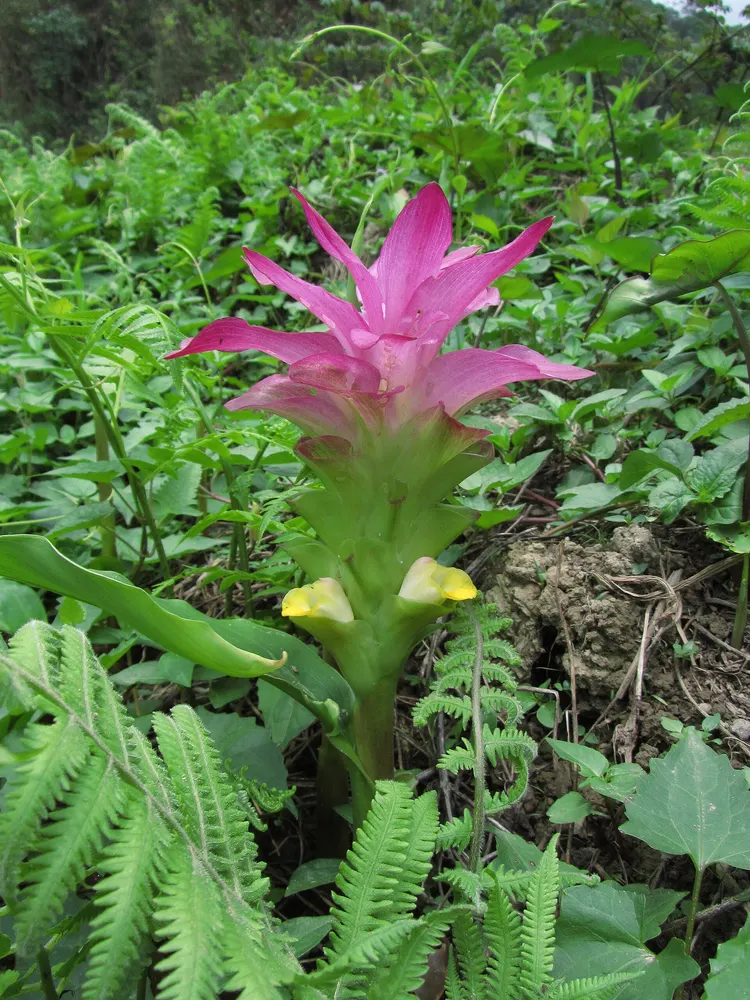
Photo: goldentakin, CC BY 2.0 (via Wikimedia Commons)
Wild Turmeric
Curcuma aromatica
Also known as Wild Turmeric, Cochin Turmeric, Forest Turmeric, Kasturi Manjal
Key benefits
✦Traditional uses
✦Wild turmeric is the fragrant, camphor-scented cousin of the turmeric found in curry powder, and in South Asian households it has long belonged to the vanity table more than the spice rack. For generations, brides and new mothers have been anointed with a paste of its ground rhizome as part of pre-wedding and postpartum beauty rituals, valued for leaving skin soft and glowing. Ayurvedic tradition also drew on the rhizome for digestive complaints and as a poultice for bruises, swelling, and minor skin troubles. Its color and fragrance made it a household staple long before anyone thought to write down why it worked.
How to grow & use it
✦The full apothecary for Wild Turmeric
Traditional remedies and step-by-step preparations, a complete growing guide, and how to harvest, dry, and store it, all unlocked with HerbLens Unlimited.
- ✦Remedies & preparations
- ✦ Growing guide
- ✦Harvest & storage
From under $6 a month. Free plant identifications always included.
- ✦Sandalwood
- ✦Neem
- ✦Culinary Turmeric
- ✦Culinary Turmeric (Curcuma longa)
- ✦Mango Ginger (Curcuma amada)
“For the golden warmth of turmeric, softened for the skin rather than the plate.”
Despite its name and golden color, wild turmeric is rarely used in cooking in the regions where it grows. Its camphor-like fragrance sets it apart from culinary turmeric, and it has stayed a beauty and household herb rather than a kitchen one.
Wild turmeric is safe in traditional topical and culinary amounts, but it's a different plant from culinary turmeric and shouldn't be taken internally in large amounts. It may thin the blood, so use caution with anticoagulant medication.