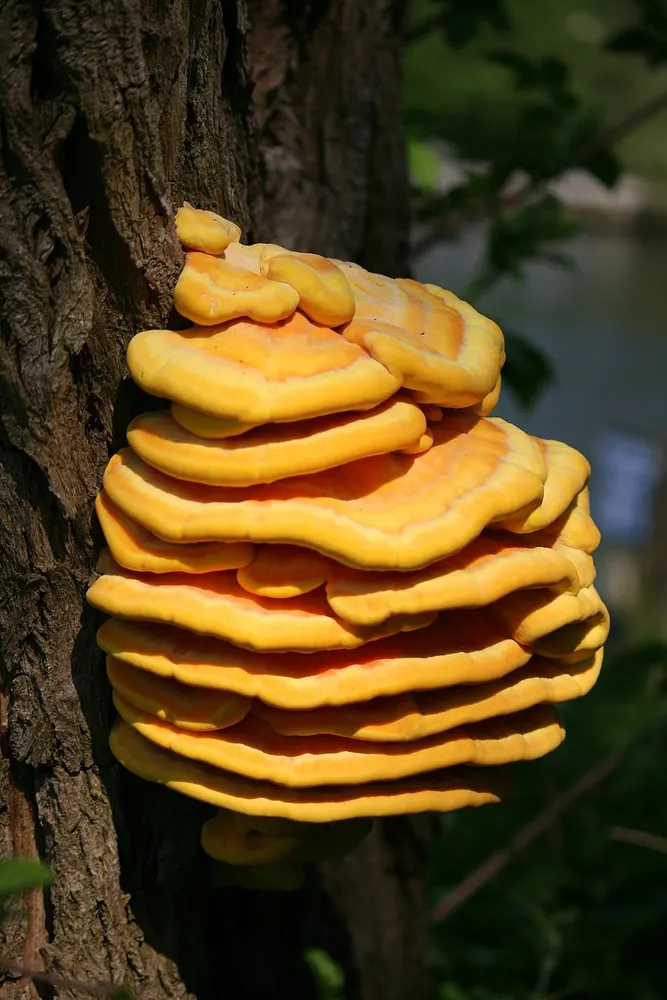
Photo: Rror, CC BY-SA 3.0 (via Wikimedia Commons)
Chicken of the Woods
Laetiporus sulphureus
Also known as Sulphur shelf, Chicken mushroom, Chicken fungus, Crab of the woods
Key benefits
✦Traditional uses
✦Chicken of the woods has been prized by foragers across North America and Europe for generations, its bright orange and yellow shelves seeming to appear almost overnight on old oak trunks after a good rain. Its tender, lemon-scented flesh was traditionally sliced, sautéed, or breaded and cooked much like poultry, which is exactly how it earned its common name. In some rural traditions it was gathered as a hearty, meat-like food during lean seasons or fasting days, valued above all for its remarkable texture and flavor rather than as a medicine. It remains one of the most recognizable and welcomed sights on a autumn woodland walk.
How to grow & use it
✦The full apothecary for Chicken of the Woods
Traditional remedies and step-by-step preparations, a complete growing guide, and how to harvest, dry, and store it, all unlocked with HerbLens Unlimited.
- ✦Remedies & preparations
- ✦ Growing guide
- ✦Harvest & storage
From under $6 a month. Free plant identifications always included.
- ✦Thyme
- ✦Sage
- ✦Garlic
- ✦Oyster mushroom
- ✦Hen of the woods (Maitake)
“For the forager who wants a taste of the forest that eats like Sunday dinner.”
Its species name sulphureus refers to the sulfur-yellow underside of the fresh brackets, and in parts of the American South it earned the nickname 'chicken mushroom' because home cooks reached for it as a meat substitute on meatless Fridays.
Correct identification is essential before eating this wild mushroom, and it should always be cooked thoroughly, never raw. Specimens growing on eucalyptus, cedar, yew, other conifers, or black locust can cause significant gastrointestinal upset and should be avoided, and combining it with alcohol can worsen reactions in some people.