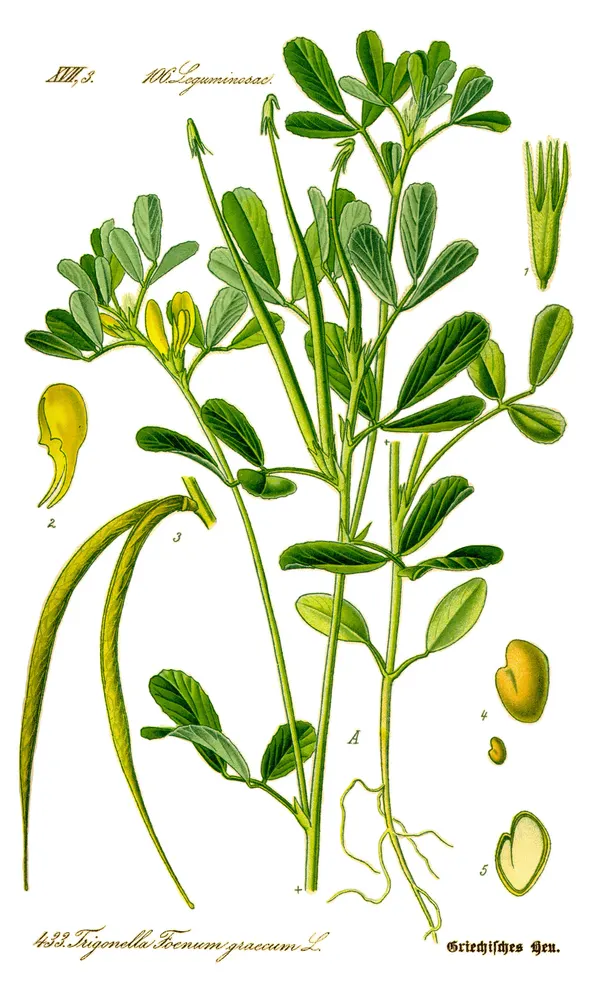
Photo: Prof. Dr. Otto Wilhelm Thomé derivative work: Ninjatacoshell (talk), Public domain (via Wikimedia Commons)
Fenugreek
Trigonella foenum-graecum
Also known as Methi, Greek Hay, Bird's Foot, Hilba
Key benefits
✦Traditional uses
✦Fenugreek seeds turn up in some of the oldest medical writings we have, from Egyptian papyri to the household remedy books of Yemen, Iran, and India, where the plant has been called methi for as long as anyone can remember. Nursing mothers across many cultures have traditionally turned to fenugreek tea or seed preparations to help support milk supply, a use so old and widespread it shows up independently in Ayurvedic, Middle Eastern, and European folk medicine. The toasted seeds, with their bittersweet, faintly maple-like aroma, have also long been chewed or brewed to settle an uneasy stomach and were rubbed into pastes to soothe irritated skin. In the kitchen, fenugreek has simply always belonged, ground into curry powders, scattered over flatbreads, and sprouted for a peppery, slightly bitter green.
How to grow & use it
✦The full apothecary for Fenugreek
Traditional remedies and step-by-step preparations, a complete growing guide, and how to harvest, dry, and store it, all unlocked with HerbLens Unlimited.
- ✦Remedies & preparations
- ✦ Growing guide
- ✦Harvest & storage
From under $6 a month. Free plant identifications always included.
- ✦Ginger
- ✦Cumin
- ✦Fennel
- ✦Fennel seed
- ✦Celery seed
“For the warm, bittersweet comfort of an old kitchen remedy passed down through generations.”
Fenugreek contains a compound called sotolon, the same aromatic responsible for the maple syrup smell some people notice in their sweat or urine after eating a generous amount of the seeds, a harmless quirk that has puzzled many a first-time taster.
Fenugreek can lower blood sugar, so use it cautiously alongside diabetes medication, and its mild blood-thinning effect may add to anticoagulants. It's a legume, so people with peanut or chickpea allergies should be cautious, and medicinal-strength doses (not ordinary culinary amounts) are best avoided in pregnancy.