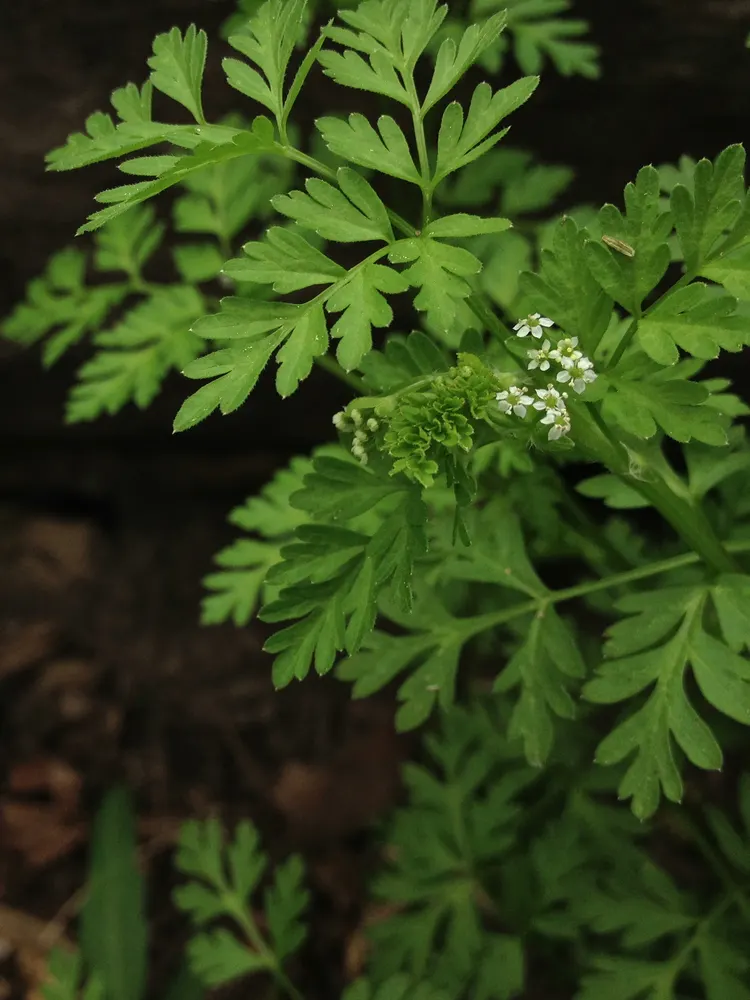
Photo: Fritzflohrreynolds, CC BY-SA 3.0 (via Wikimedia Commons)
Spreading Chervil
Chaerophyllum procumbens
Also known as Spreading Chervil, Trailing Chervil, Forest Chervil
Key benefits
✦Traditional uses
✦Spreading chervil is a modest, easily overlooked native of the eastern woodlands, one of several wild Chaerophyllum species that carpet the forest floor before the spring canopy closes in. It is often confused, in name only, with the culinary chervil of European kitchens, Anthriscus cerefolium, but the two are not the same plant and spreading chervil carries no comparable record of kitchen or apothecary use. What history it does have is mostly botanical rather than medicinal, a small, fine-leaved presence noted by early plant surveyors moving through river bottoms and shaded slopes. Its real charm today is the quiet one of early ephemerals everywhere, a soft green and white marker that the woods are waking up.
How to grow & use it
✦The full apothecary for Spreading Chervil
Traditional remedies and step-by-step preparations, a complete growing guide, and how to harvest, dry, and store it, all unlocked with HerbLens Unlimited.
- ✦Remedies & preparations
- ✦ Growing guide
- ✦Harvest & storage
From under $6 a month. Free plant identifications always included.
“A fernlike whisper of white in the early spring woods, best admired underfoot, never in the pot.”
The genus name Chaerophyllum comes from the Greek chairo, to rejoice, and phyllon, leaf, roughly meaning pleasing leaf, a nod to the fine, feathery foliage shared by this plant's more famous cousin, garden chervil. It is a reminder that within a single family, a pleasant name and a dangerous lookalike can grow only a few feet apart.
Belongs to the carrot family alongside two of North America's deadliest plants, poison hemlock and water hemlock, which share its lacy leaves and white flower clusters and have fooled even experienced foragers. It has no established history of safe culinary or medicinal use, so it should never be gathered or eaten.