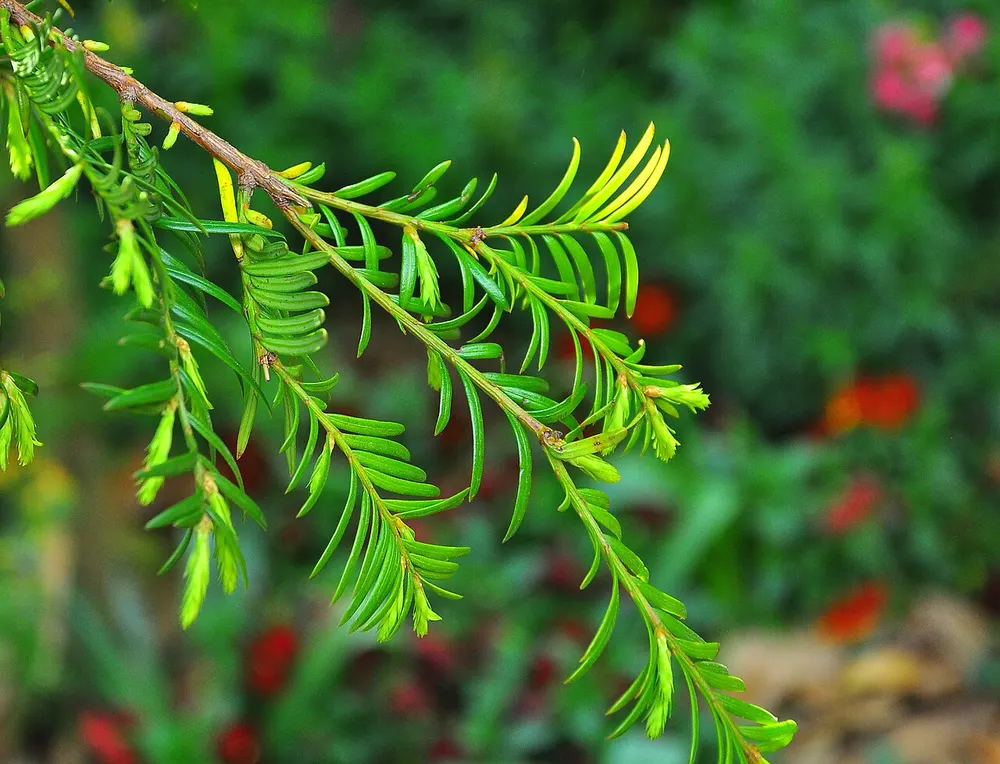
Photo: Zhangmoon618, CC BY-SA 4.0 (via Wikimedia Commons)
Yunnan Yew
Taxus yunnanensis
Also known as Yunnan yew, Chinese yew
Key benefits
✦Traditional uses
✦Yunnan yew belongs to one of the oldest conifer lineages on earth, yet unlike many woodland plants around it, it was never taken up as a home remedy, because every part of the tree carries dangerous alkaloids. Its real story unfolded in the twentieth century, when chemists discovered that yews across the genus produce taxane compounds capable of slowing the growth of certain cancers. Growing across the misty, high mountain forests of southwest China, Yunnan yew became one of the most important living sources of these compounds, and its bark and needles were harvested heavily to help supply paclitaxel production for chemotherapy. That demand pushed wild populations to the edge of survival, and the tree is now cared for as much for its rarity as for the science it helped make possible.
How to grow & use it
✦The full apothecary for Yunnan Yew
Traditional remedies and step-by-step preparations, a complete growing guide, and how to harvest, dry, and store it, all unlocked with HerbLens Unlimited.
- ✦Remedies & preparations
- ✦ Growing guide
- ✦Harvest & storage
From under $6 a month. Free plant identifications always included.
“For the hush of an ancient, shaded conifer forest, and a quiet reminder that some of medicine's greatest gifts arrive wrapped in poison.”
Paclitaxel, the cancer fighting compound now produced in part from yew needle biomass including that of Yunnan yew, was first isolated in 1971 from the bark of a single Pacific yew tree in Washington State, the result of a National Cancer Institute program that had screened thousands of plants in search of something exactly like it.
Every part of Yunnan yew, including its needles, bark, seeds, and even the sweet looking red aril flesh around the seed, contains taxine alkaloids that are highly toxic to people and animals. Ingesting any part of this plant can cause severe cardiac arrhythmia and has proven fatal to humans and livestock, sometimes within hours and with little warning. Taxus yunnanensis is also critically endangered in the wild after decades of overharvesting for pharmaceutical taxane production, so it should never be foraged or wild collected, and any medicinal use of its compounds happens exclusively through regulated pharmaceutical manufacturing, never through home preparation. Keep this tree, including fallen needles and berries, well away from children, pets, and grazing animals, and contact a physician or poison control center immediately if any part is ingested. Always talk to a qualified healthcare professional or arborist before adding this or any yew species to a garden with children, pets, or livestock nearby.