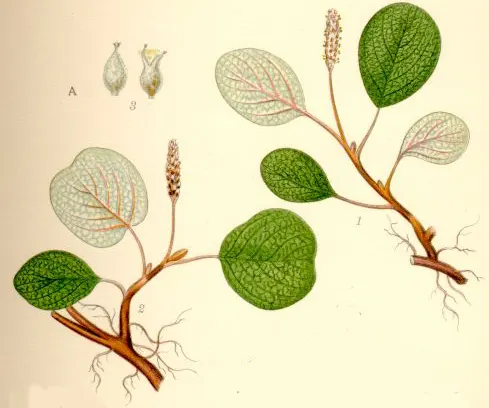
Photo: Carl Axel Magnus Lindman, Public domain (via Wikimedia Commons)
Net-leaf Willow
Salix reticulata
Also known as Net-veined Willow, Net-leaved Willow, Arctic Willow
Key benefits
✦Traditional uses
✦Net-leaf willow is a true miniature among willows, hugging the ground where taller trees cannot survive the wind and cold of the Arctic and alpine world. Like its towering cousins, its bark carries salicin, the bitter compound behind the willow family's long reputation as a folk remedy for aches, fevers, and general discomfort, and northern peoples living among these dwarf willows are known to have turned to willow bark preparations in the same traditional way. Its tender young leaves were also gathered in early spring by Arctic foragers as a welcome source of greens after a long winter. Caribou, muskoxen, and ptarmigan rely on its twigs and leaves as a staple browse, making it as important to tundra wildlife as it once was to the people who lived alongside them.
How to grow & use it
✦The full apothecary for Net-leaf Willow
Traditional remedies and step-by-step preparations, a complete growing guide, and how to harvest, dry, and store it, all unlocked with HerbLens Unlimited.
- ✦Remedies & preparations
- ✦ Growing guide
- ✦Harvest & storage
From under $6 a month. Free plant identifications always included.
- ✦Meadowsweet
- ✦Ginger
- ✦Peppermint
- ✦White willow bark (Salix alba)
- ✦Meadowsweet
“For a taste of the tundra's oldest remedy, low to the ground and ancient in lineage.”
Net-leaf willow is one of the smallest woody plants in the entire willow genus, so low and ground-hugging that a whole colony can be mistaken for a patch of moss, yet it belongs to the very same salicin-rich family that eventually gave the world aspirin.
Willow bark contains salicin, related to aspirin, so avoid it with an aspirin allergy, stomach ulcers, a bleeding disorder, or blood thinners. Never give it to children or teens due to the risk of Reye's syndrome, and avoid it during pregnancy and breastfeeding.