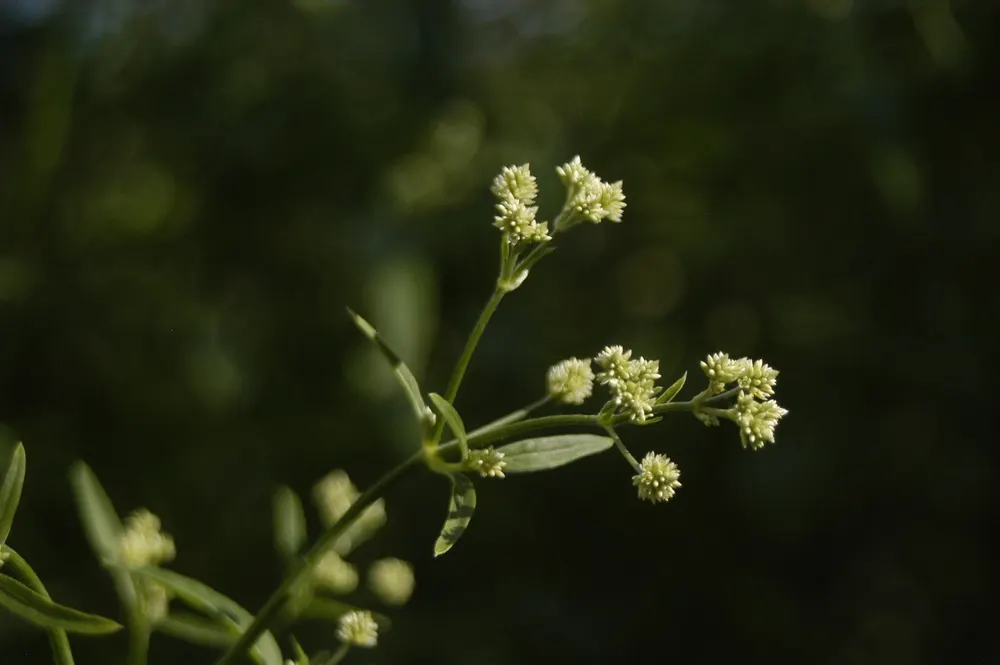
Photo: CostaPPPR, CC BY 3.0 (via Wikimedia Commons)
Ginseng Brasileiro (Brazilian Ginseng)
Pfaffia glomerata
Also known as Brazilian Ginseng, Fáfia, Ginseng Brasileiro, Cabelo-de-negro
Key benefits
✦Traditional uses
✦In the folk medicine of Brazil, the root of Pfaffia glomerata has long been dug, dried, and simmered into a tonic said to restore strength after illness, fatigue, or hard physical labor, earning it the nickname Brazilian ginseng even though it is no relation to true Panax ginseng at all. Rural healers traditionally reached for it as a general fortifying tonic and, less commonly, as a support for fertility and reproductive vitality. The crushed fresh leaves were also pressed onto cuts and minor wounds as a folk first-aid measure. Its cousin, Pfaffia paniculata (known as Suma), shares a similar reputation and the two are sometimes sold interchangeably in South American markets.
How to grow & use it
✦The full apothecary for Ginseng Brasileiro (Brazilian Ginseng)
Traditional remedies and step-by-step preparations, a complete growing guide, and how to harvest, dry, and store it, all unlocked with HerbLens Unlimited.
- ✦Remedies & preparations
- ✦ Growing guide
- ✦Harvest & storage
From under $6 a month. Free plant identifications always included.
- ✦Ginger
- ✦Cinnamon
- ✦Cat's Claw
- ✦Suma root (Pfaffia paniculata)
- ✦Ashwagandha
“For a humble Brazilian root, dug from the cerrado and simmered into a tonic to steady the body through weary seasons.”
The species name glomerata comes from the Latin for 'clustered into a ball,' describing the tight little bunches of greenish flowers the plant produces, a small botanical clue long before anyone looks at its root.
Brazilian ginseng is generally well tolerated as a traditional tonic, but its compounds may have mild hormone-like effects and may interact with blood sugar or hormone medications. It's traditionally avoided in pregnancy, breastfeeding, and by anyone with a hormone-sensitive condition.