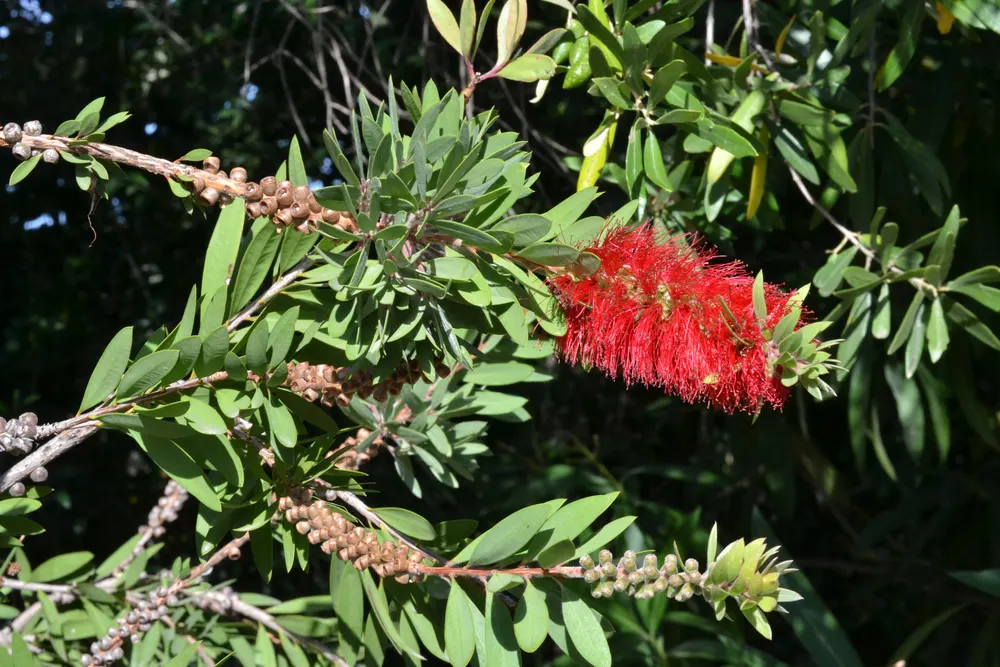
Photo: DirkHoffmann, CC BY-SA 3.0 (via Wikimedia Commons)
Crimson Bottlebrush
Callistemon citrinus
Also known as Lemon Bottlebrush, Crimson Bottlebrush, Common Red Bottlebrush
Key benefits
✦Traditional uses
✦Long before it graced gardens outside Australia, the crimson bottlebrush fed people as much as it fed the honeyeaters and bees drawn to its brush-shaped blooms. Aboriginal Australians would pluck the flower spikes and suck the nectar straight from the blossom, or steep whole flower heads in water to make a naturally sweet drink, a small everyday pleasure recorded across several bush tucker traditions. The leaves, when crushed, release a sharp lemony fragrance that early settlers noticed too, and they were sometimes rubbed on skin or scattered indoors in the same spirit later generations would use citronella. Today the plant is prized mostly as an ornamental, but that thread of practical, everyday use runs all the way back through its native range.
How to grow & use it
✦The full apothecary for Crimson Bottlebrush
Traditional remedies and step-by-step preparations, a complete growing guide, and how to harvest, dry, and store it, all unlocked with HerbLens Unlimited.
- ✦Remedies & preparations
- ✦ Growing guide
- ✦Harvest & storage
From under $6 a month. Free plant identifications always included.
- ✦Lemon myrtle
- ✦Native mint bush
- ✦Honey
- ✦Grevillea flowers
- ✦Banksia flowers
“For a garden that hums with bees and glows crimson from spring clear through summer.”
The species name citrinus refers to the sharp lemon scent the crushed leaves give off, a trait shared by its cousin lemon myrtle, and it comes from the same kind of aromatic oil, citronellal, that gives citronella candles their smell.
Not used as an internal medicine; its aromatic oils can irritate sensitive skin, so patch test before topical use. Keep pets and grazing animals from chewing the foliage.