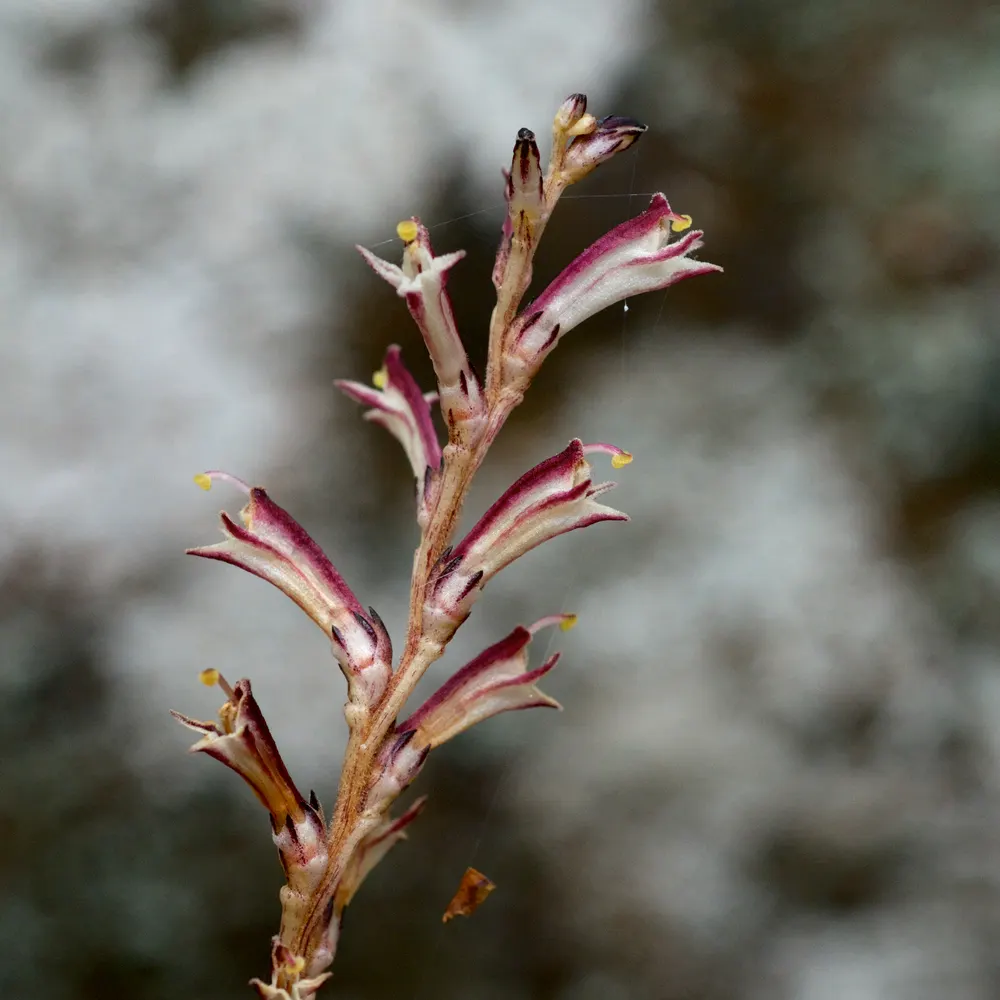
Photo: Eric Hunt, CC BY-SA 4.0 (via Wikimedia Commons)
Beechdrops
Epifagus virginiana
Also known as Cancer Root, American Cancer-Root, Broom-Rape
Key benefits
✦Traditional uses
✦Long before it found its way into nineteenth century American dispensatories, beechdrops was gathered by Native American healers and Appalachian settlers who valued its puckering, tannin rich stems as a gentle astringent. Eclectic physicians of the 1800s recorded it as a folk remedy for canker sores, mouth ulcers, and the stubborn, weeping skin sores that earned it the old country name cancer-root, a name describing its topical use rather than any real link to the disease. Cooled infusions were dabbed onto irritated skin and mild teas were sipped sparingly to help settle a restless stomach. Because it grows only at the foot of an old beech tree and nowhere else, finding beechdrops has always felt less like harvesting a crop and more like receiving a quiet gift from the forest floor.
How to grow & use it
✦The full apothecary for Beechdrops
Traditional remedies and step-by-step preparations, a complete growing guide, and how to harvest, dry, and store it, all unlocked with HerbLens Unlimited.
- ✦Remedies & preparations
- ✦ Growing guide
- ✦Harvest & storage
From under $6 a month. Free plant identifications always included.
- ✦Chamomile
- ✦Plantain
- ✦Witch hazel
- ✦Witch hazel
- ✦White oak bark
“When the beech leaves begin to turn, look to the roots of that old tree for the ghostly brown stalks that live only by borrowing.”
Beechdrops never turn green a day in their lives. They carry no chlorophyll at all and survive entirely by tapping into the roots of a single host, the American beech, making them one of the few North American wildflowers that cannot photosynthesize or be grown apart from their tree.
Beechdrops is high in tannins and should not be taken internally in large amounts or over long periods, since excess tannins can irritate digestion and block mineral absorption. It is best avoided during pregnancy and breastfeeding.