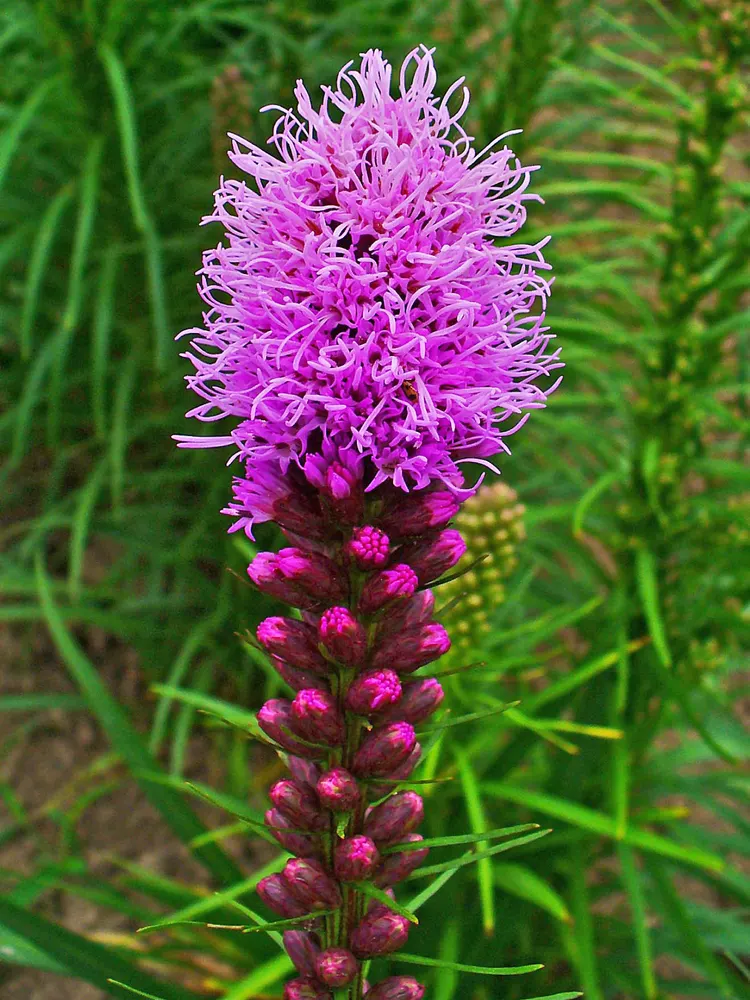
Photo: H. Zell, CC BY-SA 3.0 (via Wikimedia Commons)
Blazing Star
Liatris spicata
Also known as Gayfeather, Dense Blazing Star, Marsh Blazing Star, Button Snakeroot
Key benefits
✦Traditional uses
✦Blazing star has long been a fixture of the tallgrass prairie, its purple spikes rising above the grasses in late summer like small torches, which is likely how it earned its common name. Several Native peoples of the eastern woodlands and prairies, including the Meskwaki, dug and dried the corm for use in traditional remedies aimed at the kidneys and urinary tract, and applied preparations of it externally for swelling. The dried root also carries a soft, vanilla-like sweetness, and it was valued for scenting sachets, pouches, and stored clothing long before it became a garden favorite. Today it is grown far more often for its beauty and its wildlife value than for any medicinal purpose, and it plays a especially important role for monarch butterflies fueling up on their fall migration south.
How to grow & use it
✦The full apothecary for Blazing Star
Traditional remedies and step-by-step preparations, a complete growing guide, and how to harvest, dry, and store it, all unlocked with HerbLens Unlimited.
- ✦Remedies & preparations
- ✦ Growing guide
- ✦Harvest & storage
From under $6 a month. Free plant identifications always included.
- ✦Purple coneflower (Echinacea)
- ✦Black-eyed Susan
- ✦New England aster
- ✦Rough blazing star (Liatris aspera)
- ✦Prairie blazing star (Liatris pycnostachya)
“You want a tall purple torch that pulls monarchs out of the sky on their way south.”
Most spiky flowers, like foxglove or lupine, bloom from the bottom of the stalk upward. Blazing star does the opposite, opening its buds from the tip of the spike downward, which is part of why it makes such a striking, slow-unfurling cut flower.
Blazing star isn't known to be toxic, but it lacks a reliable history of internal medicinal use, so it's best enjoyed in the garden rather than ingested.