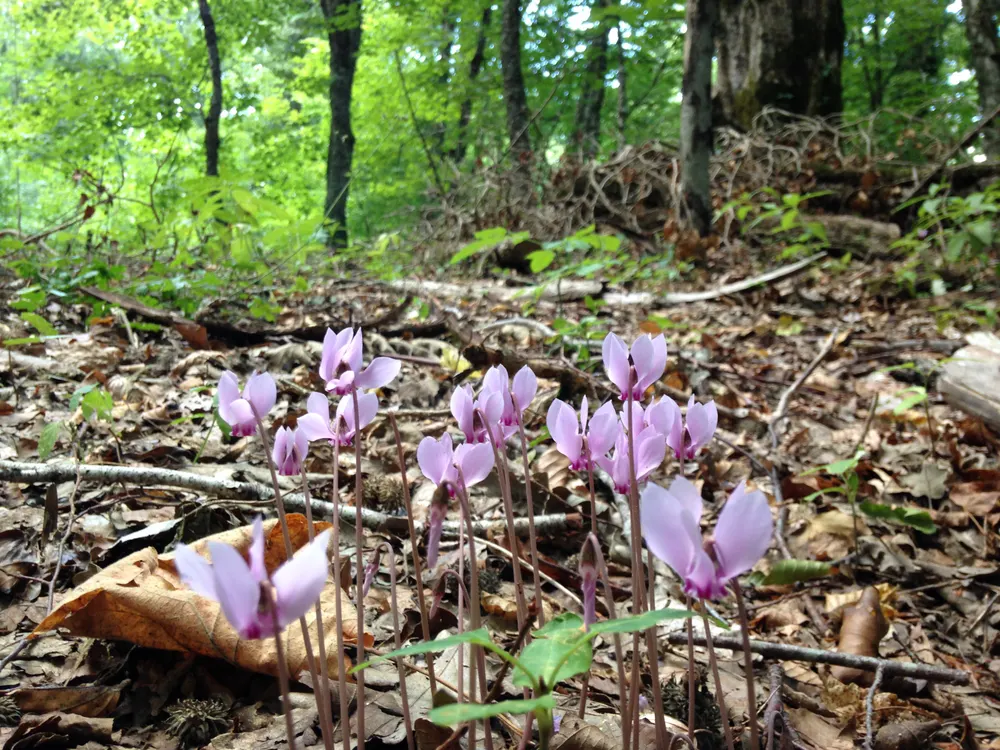
Photo: Mario Rainaldi, CC BY-SA 4.0 (via Wikimedia Commons)
Ivy-leaved Cyclamen
Cyclamen hederifolium
Also known as Sowbread, Hardy Cyclamen, Baby Cyclamen, Neapolitan Cyclamen
Key benefits
✦Traditional uses
✦Long before it found its way into shaded English gardens, ivy-leaved cyclamen carpeted the stony woodlands of the Mediterranean, its pink and white blooms appearing almost overnight in the tired light of early autumn. Country folk called it sowbread, a nod to old accounts of wild pigs rooting up and eating the tubers, and gardeners have prized it for centuries for doing what almost nothing else will: flowering cheerfully under trees just as everything else winds down for winter. Herbal writers of earlier eras did record folk uses for the tuber, but those preparations were harsh and unreliable, and this plant has always belonged more to the garden than to the medicine chest. Today it endures simply as one of the most beloved small bulbs for naturalizing in shade, its marbled ivy-shaped leaves often as prized as the flowers themselves.
How to grow & use it
✦The full apothecary for Ivy-leaved Cyclamen
Traditional remedies and step-by-step preparations, a complete growing guide, and how to harvest, dry, and store it, all unlocked with HerbLens Unlimited.
- ✦Remedies & preparations
- ✦ Growing guide
- ✦Harvest & storage
From under $6 a month. Free plant identifications always included.
- ✦Hellebore
- ✦Snowdrop
- ✦Hardy fern
- ✦Persian violet (Exacum) for indoor pot color
- ✦Autumn crocus for a similar season of bloom in shade-adjacent beds
“For the one small flower brave enough to bloom while the garden is already turning toward sleep.”
The seed pods of ivy-leaved cyclamen sit atop a stem that coils itself into a tight spring after flowering, slowly winching the ripening seeds down to the soil where ants can find them and carry them off, tucked in a sweet, sticky coating, to sprout in new corners of the woodland.
All parts, especially the tuber, contain saponins that are toxic if eaten, causing vomiting and diarrhea, and the plant is toxic to dogs and cats. It is an ornamental only and should never be eaten; keep it away from pets and children.