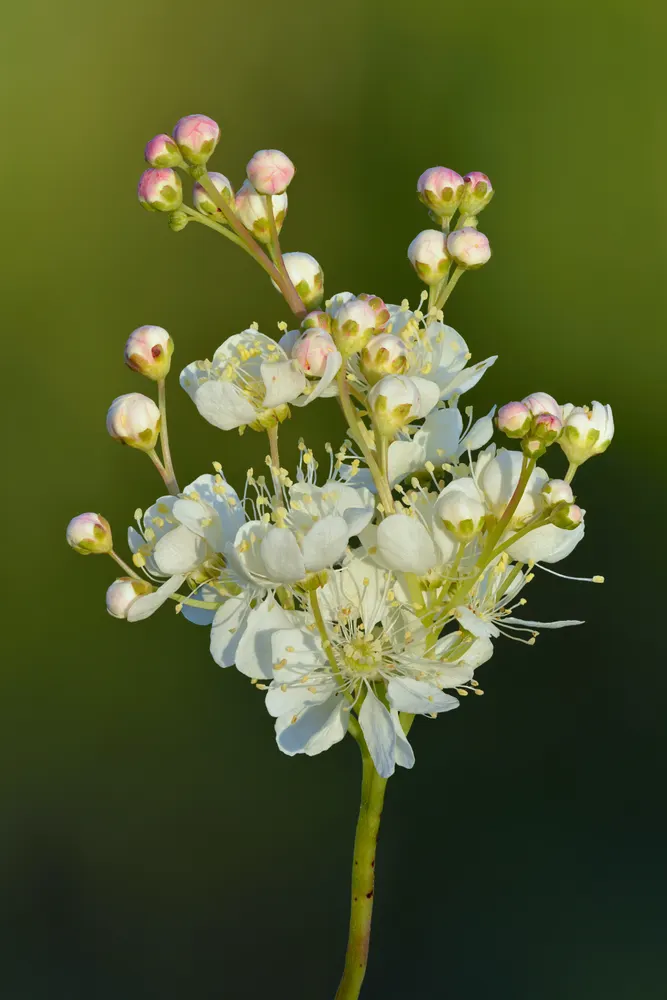
Photo: Ivar Leidus, CC BY-SA 4.0 (via Wikimedia Commons)
Dropwort
Filipendula vulgaris
Also known as Fern-leaf Dropwort, Fernleaf Dropwort, Meadow Dropwort
Key benefits
✦Traditional uses
✦Dropwort is the drier, chalk-loving cousin of meadowsweet, and old herbals often used the two almost interchangeably. Country herbalists gathered its root tubers and frothy flower heads for teas meant to settle a troubled stomach and ease the aches of a long day's work. Because it shares meadowsweet's naturally occurring salicylates, the compounds later chemists would isolate to develop aspirin, dropwort earned a quiet reputation as a household remedy for fevers and minor pains long before that chemistry had a name. In cottage gardens it was also simply prized for its honeyed, almond-like scent and its cheerful sprays of bloom.
How to grow & use it
✦The full apothecary for Dropwort
Traditional remedies and step-by-step preparations, a complete growing guide, and how to harvest, dry, and store it, all unlocked with HerbLens Unlimited.
- ✦Remedies & preparations
- ✦ Growing guide
- ✦Harvest & storage
From under $6 a month. Free plant identifications always included.
- ✦Meadowsweet
- ✦Chamomile
- ✦Peppermint
- ✦Meadowsweet
- ✦Chamomile
“For the quiet, chalky-meadow cousin of meadowsweet, sweet-scented and steeped in old country remedy.”
Dropwort takes its name from the small tuberous swellings that hang along its roots like beads on a string, once thought to resemble drops of water caught in the earth.
Dropwort contains aspirin-like salicylates, so avoid it if you have a salicylate or aspirin allergy, take blood thinners, or have asthma, ulcers, or a bleeding disorder. Children and teens recovering from a viral illness should avoid it due to Reye's syndrome risk, and it's not recommended during pregnancy or breastfeeding.