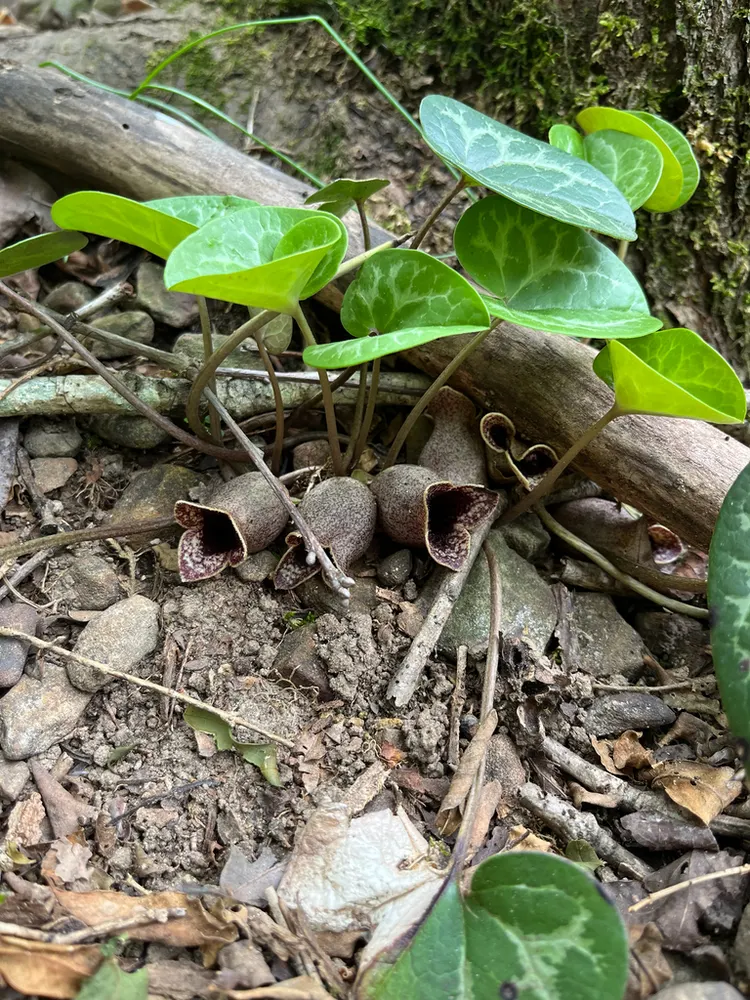
Photo: NShehan, CC0 (via Wikimedia Commons)
Shuttleworth's Ginger
Asarum shuttleworthii
Also known as Mottled Wild Ginger, Little Brown Jug, Southern Wild Ginger
Key benefits
✦Traditional uses
✦Long before it found its way into shade gardens, Shuttleworth's ginger grew quietly on the forest floor of the southern Appalachians, its heart-shaped leaves stitched with silvery mottling like frost on a windowpane. Older folk herbals grouped the wild gingers, Asarum species, alongside true culinary ginger as warming, aromatic roots, and some Appalachian communities dug the rhizomes for flavoring or home remedies. Modern research has since shown that Asarum species, including this one, contain aristolochic acid compounds that make that old practice unsafe by today's understanding, so the plant's story has shifted from the root cellar to the shade garden, where it is now prized simply for its quiet, evergreen beauty.
How to grow & use it
✦The full apothecary for Shuttleworth's Ginger
Traditional remedies and step-by-step preparations, a complete growing guide, and how to harvest, dry, and store it, all unlocked with HerbLens Unlimited.
- ✦Remedies & preparations
- ✦ Growing guide
- ✦Harvest & storage
From under $6 a month. Free plant identifications always included.
- ✦Hepatica
- ✦Foamflower (Tiarella)
- ✦Christmas fern
- ✦True ginger (Zingiber officinale) for any culinary or traditional ginger use
“For the quiet corners of a shade garden that need a evergreen carpet of silver-veined leaves and nothing more asked of them.”
Shuttleworth's ginger hides its odd little jug-shaped flowers right at the soil line, tucked beneath the leaf canopy. Botanists believe this low placement, along with the flower's faint decaying smell, is an invitation to the ground-crawling flies and fungus gnats that pollinate it, rather than to the bees flying above.
This plant contains aristolochic acid, a compound proven to cause irreversible kidney damage and classified as a human carcinogen. It should never be ingested in any form, despite old folk traditions of using wild gingers as a ginger substitute, and it is unrelated to true culinary ginger. Keep it away from children, pets, and livestock.