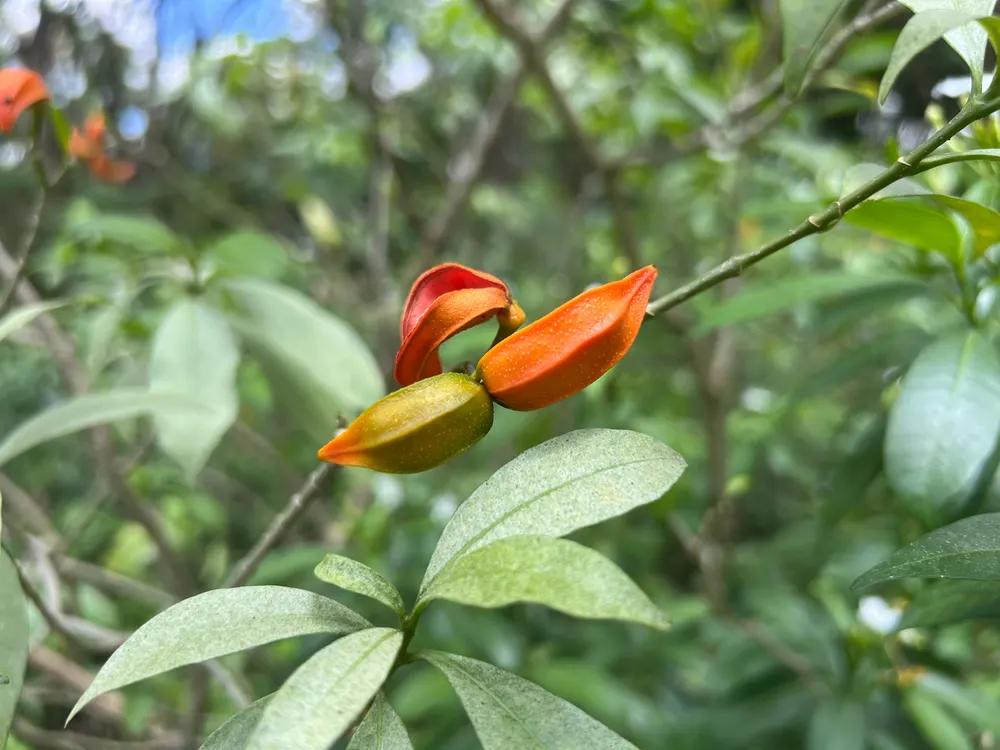
Photo: A.C.T. Alejandre, CC BY-SA 4.0 (via Wikimedia Commons)
Windmill Bush
Tabernaemontana pandacaqui
Also known as Pandacaqui, Banana Bush, Broad-leaved Tabernaemontana, Miki Miki (regional Pacific name)
Key benefits
✦Traditional uses
✦Across the Philippines and parts of the Pacific, windmill bush has long grown at the edge of village gardens and coastal scrub, where its glossy leaves and twisted white flowers made it easy to recognize. Older generations in some communities dabbed the milky latex or a leaf preparation onto the skin for minor irritations, treating it strictly as an external, hands-off remedy rather than something to be taken by mouth. That caution has carried forward into how the plant is regarded today: valued for its presence in the landscape and its place in local plant lore, but not considered a kitchen or tea-cabinet herb. Its real legacy is closer to a hedgerow companion than a medicine chest staple.
How to grow & use it
✦The full apothecary for Windmill Bush
Traditional remedies and step-by-step preparations, a complete growing guide, and how to harvest, dry, and store it, all unlocked with HerbLens Unlimited.
- ✦Remedies & preparations
- ✦ Growing guide
- ✦Harvest & storage
From under $6 a month. Free plant identifications always included.
“For the coastal garden that wants twisted white pinwheels by day, a whisper of fragrance by evening, and a flash of orange fruit for the birds come fruiting season.”
The paired, curving seed pods that give windmill bush its 'banana bush' nickname split open to reveal seeds wrapped in a bright orange coating that birds find irresistible, and it's the birds carrying those seeds off that have helped scatter this shrub across islands throughout the Pacific.
Windmill bush belongs to the dogbane family, Apocynaceae, and like most of its relatives it bleeds a milky white latex the moment a leaf or stem is broken. That latex is a known skin and eye irritant, and the bark, roots, and seeds of Tabernaemontana species are recognized to carry bioactive indole alkaloids whose effects on the body are not well characterized or established as safe. This entry lists no internal preparations for that reason. Do not brew, chew, or otherwise ingest any part of this plant, and keep the fruit and foliage away from children and curious pets, since the bright orange seed coating can tempt small hands. Handle cuttings with gloves if you have sensitive skin. If you are drawn to this plant for its traditional folk associations, please speak with a qualified herbalist, physician, or toxicologist before considering any use beyond admiring it in the garden.